Content Warning: This article features discussion and images that depict violence and conflict
On a late Saturday evening in June, the 68,000 fans in Mercedes-Benz Stadium held their breath as the Democratic Republic of the Congo entered the 90th minute of its final Group K match of the 2026 FIFA World Cup. Facing debutants Uzbekistan, Les Léopards (The Leopards) had come from behind to take a 2-1 lead. Yet despite the imminent victory, the air in Atlanta was filled with anxiety. To advance to the knockout stage of the tournament for the first time, DR Congo had to hold on to its lead, something it had never done before at a World Cup. Then Meschak Elia picked up the ball near the touchline and played a pass to Yoane Wissa.
Days earlier, Wissa, Les Léopards‘ star striker who plays for Newcastle United in the Premier League, had made history by scoring DR Congo’s first-ever World Cup goal when he outleaped multiple defenders to head home against one of the tournament favorites, Portugal. The French-born Wissa, who had also scored a penalty earlier that evening to level the match, survived a bizarre acid attack before making his name in the Premier League, leading Les Léopards to the semifinals of the 2023 Africa Cup of Nations, and guiding the Central African nation to its first World Cup appearance in more than half a century.
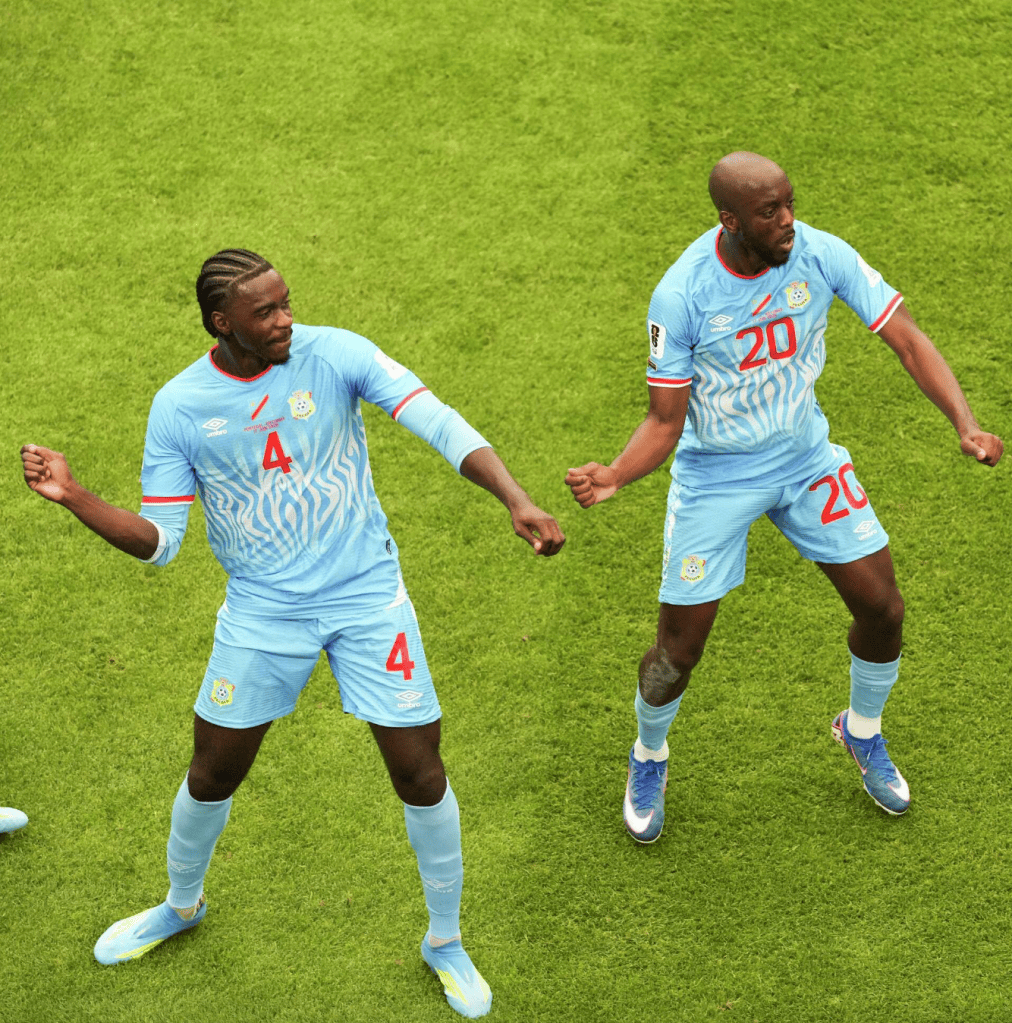
As Wissa collected the ball, he cut inside to a position just beyond the penalty area and unleashed a low, curling strike that settled into the side netting. The majority-Congolese crowd erupted as the goal secured a place in the Round of 32. As Wissa ran to the sideline to celebrate, he cocked back his right arm and swung it repeatedly in a whipping motion. His teammates and many Congolese supporters joined him in performing the celebration known as the “fimbu.” The fimbu (Lingala for “the whip”) had accompanied every Congolese goal at the World Cup and quickly took social media by storm. It was performed by countless Congolese fans and influencers, and even Jamie Vardy.
(Jason Fochtman, Houston Chronicle)
Despite the cheerful faces of those performing the dance, the ritual has surprisingly dark origins. The dance allegedly dates back to the colonial era, when millions of Congolese were effectively enslaved by Belgian colonists who often used lanyard whips to administer corporal punishment. In 2015, however, a Congolese pop star named Felix Wakenza released “Fimbu,” a song that popularized the dance and helped reclaim the symbol as one of joy. The national team has since adopted the trend as its signature goal celebration, implying that opponents, rather than Congolese people, would be the recipients of punishment on the field.
As Congolese fans across the country, from the capital of Kinshasa to the rebel-held eastern city of Goma, celebrated this historic victory, Wissa and Les Léopards came to symbolize a long-suffering nation taking ownership of its identity and embracing a distinct form of patriotism. This edition of Explaining Offsides will examine DR Congo’s tumultuous footballing history and explore how the national team has used soccer as a tool for cultivating national pride while helping to banish the ghosts of the country’s past and present.
“African” ignorance
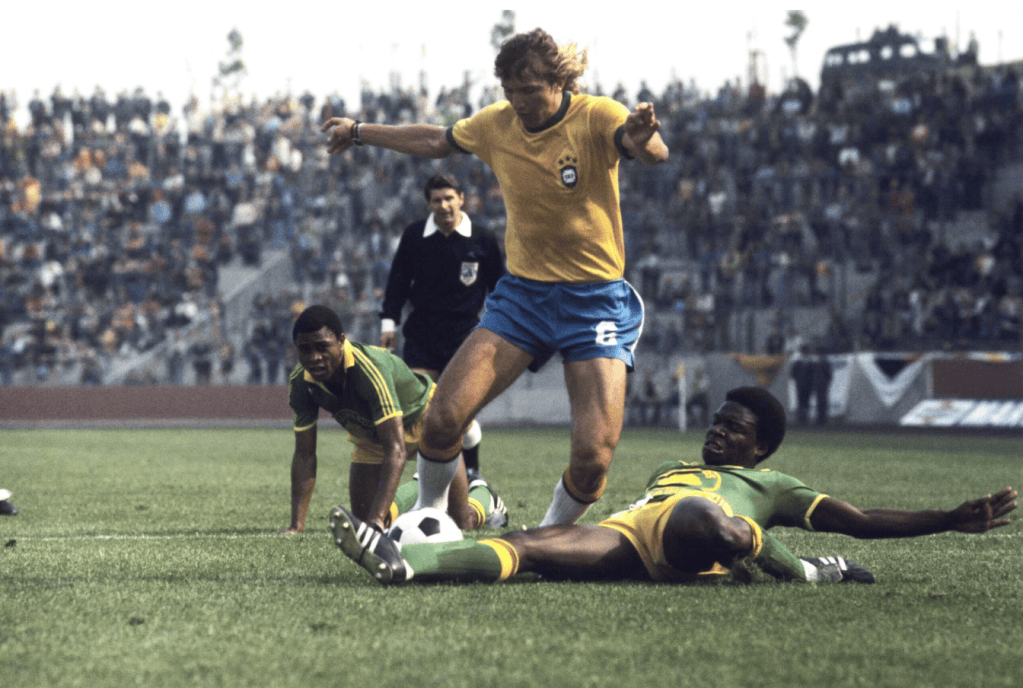
Rewinding more than half a century to a sunny June afternoon at the Parkstadion in Gelsenkirchen, West Germany, Les Léopards were taking on defending world champions Brazil. Entering the 78th minute, Brazil, already leading 2-0, earned a free kick just outside the Zairian penalty area. In a chaotic scene, the Congolese wall scrambled into position as Brazilian dead-ball specialist Rivelino prepared to take the kick.
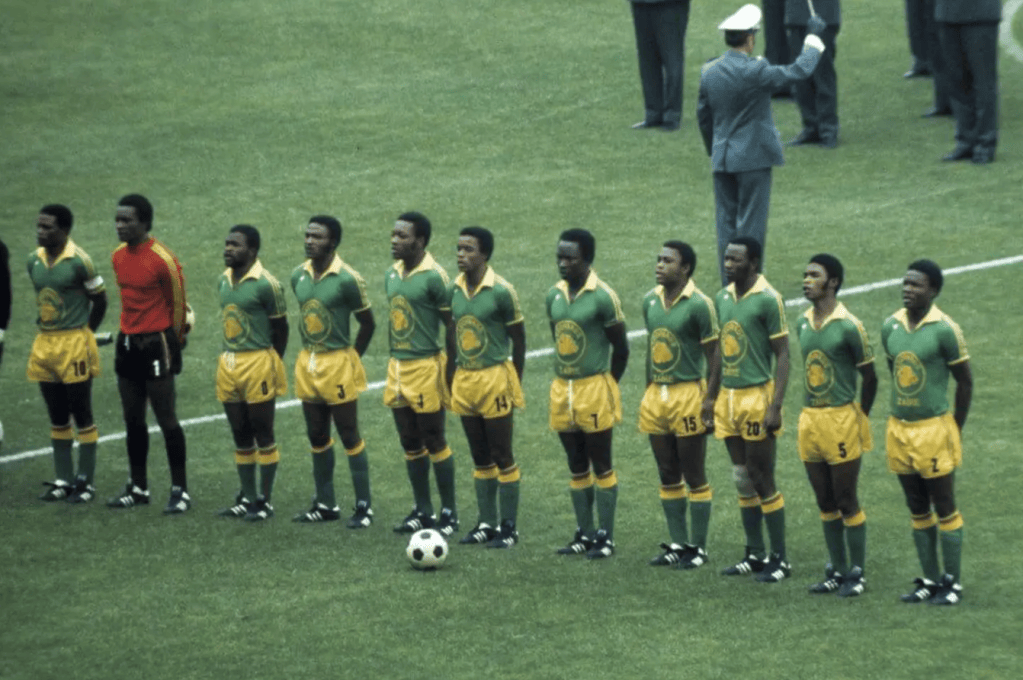
It had already been a disastrous tournament for DR Congo, then known as Zaire. The team had lost its previous two matches, falling 2-0 to Scotland before suffering a 9-0 mauling at the hands of Yugoslavia. When the referee blew the whistle, defender Mwepu Ilunga sprinted out of the wall and booted the ball as far as he could, eliciting bewilderment from spectators as he received a yellow card. Brazil would score once more before the final whistle, and Les Léopards departed the World Cup with zero wins, zero goals scored, three losses, and 14 goals conceded. They would not return for another 52 years.
Many European commentators explained this jarring moment by claiming that Ilunga simply did not understand the rules of soccer. Zaire’s participation in the 1974 World Cup marked the first appearance by a sub-Saharan African nation in the tournament. Owing in part to the racial attitudes of the era, many observers concluded that the players were unaware of proper free-kick etiquette, with legendary English commentator John Motson describing it as a “bizarre moment of African ignorance.” Yet the apparent absurdity of the incident obscured a much darker story. Far from being a moment of confusion, it reflected the ways corruption, authoritarianism, and political terror had shaped Les Léopards’ World Cup campaign.
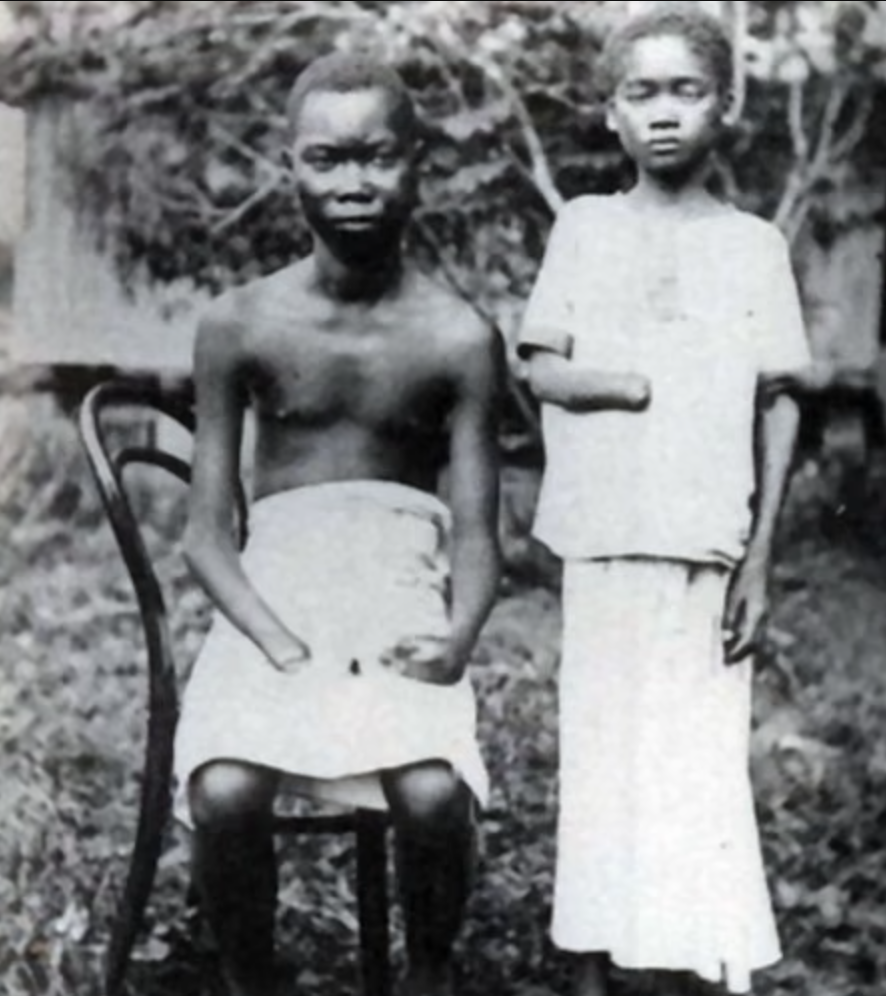
The Zairian players entered the 1974 World Cup amid a tense political climate, though given Congolese history over the preceding ninety years, that was hardly unusual. The Central African nation was first colonized in the late nineteenth century as the personal possession of King Leopold II of Belgium. This period was characterized by unimaginable horrors, from de facto slavery to forced mutilations. By the time the Belgian monarchy finally relinquished control, an estimated 8 to 10 million Congolese had died.
Fourteen years before Les Léopards’ maiden World Cup voyage, the Belgian Congo finally gained independence. In 1960, it became the Republic of the Congo and elected revolutionary leader Patrice Lumumba as its first prime minister. The joy of liberation proved short-lived. The new nation was almost immediately plunged into a five-year period of civil conflict in which competing factions, often aligned with rival Cold War powers, engaged in rebellions, secessionist movements, and coups. The turmoil became known as the Congo Crisis.
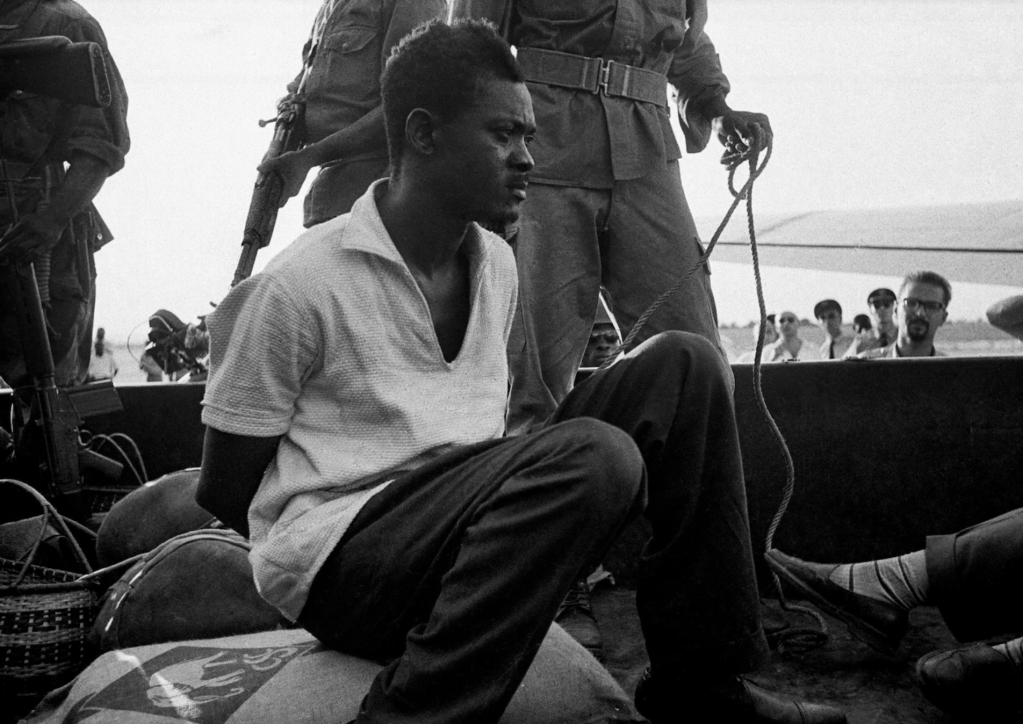
Amid the chaos, Lumumba was captured and assassinated by mutineers backed by the CIA, which viewed him as sympathetic to the Soviet Union. The violence, which claimed hundreds of thousands of lives, ended only after General Joseph Mobutu seized power in a 1965 coup. He initially installed himself as prime minister before later assuming the presidency and renaming the country Zaire in 1971.
Though the nation had been torn apart by conflict, Congolese soccer would experience a golden era. Congolese clubs were crowned as African champions in 1967, 1968, and Les Léopards won the 1968 and 1974 African Cup of Nations. The national team then became the first sub-Saharan African team to qualify for the FIFA World Cup when they beat Morocco, the previous African World Cup representative, 3-0. Going into 1974, Zaire were the pride of African soccer, and President Mobutu, now-named Mobutu Seke Seko, showered the team with lavish gifts from houses to luxury cars.
However, the players found themselves in a precarious position. At home, President Mobutu had proven to be an authoritarian and deeply narcissistic ruler who cultivated an elaborate cult of personality, fostered a culture of corruption and kleptocracy, and personally embezzled billions of dollars from the national treasury and foreign aid funds.
He launched an Africanization campaign known as Authenticité (“Authenticity”), which sought to eliminate many visible traces of European influence. Among other measures, the initiative prohibited Western names. Mobutu renamed the country Zaire and rechristened himself Mobutu Sese Seko Kuku Ngbendu wa za Banga, a name that roughly translates as “the all-powerful warrior who, because of his endurance and inflexible will to win, will go from conquest to conquest, leaving fire in his wake.”
Yet the players also stood to benefit enormously from winning Mobutu’s favor. After securing qualification, he showered the squad with lavish gifts ranging from houses to luxury cars and promised additional rewards, including more than $20,000 for participation in the World Cup.
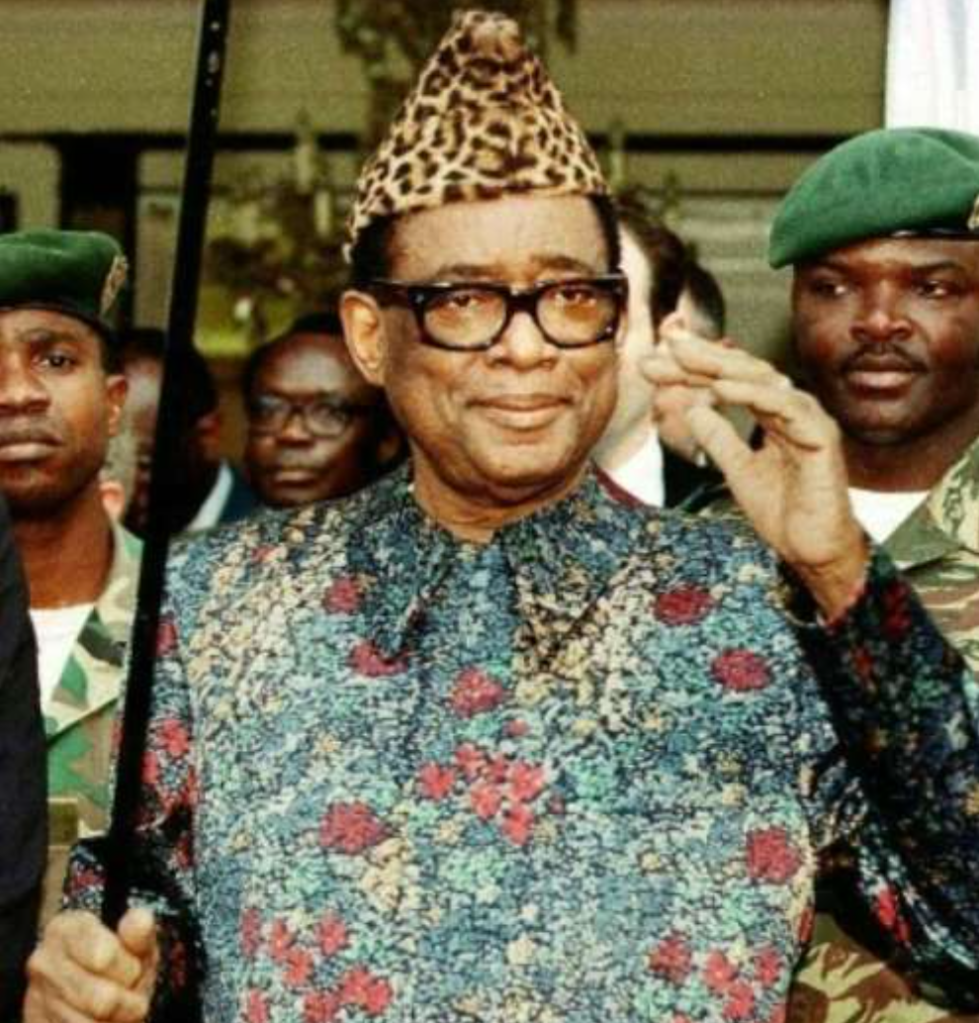
At the time, Mobutu was aggressively pursuing international prestige through sport and cultural events. In 1974, Zaire hosted the famous Rumble in the Jungle heavyweight title fight between Muhammad Ali and George Foreman, as well as the Zaire 74 music festival featuring performers such as James Brown, B.B. King, and the Pointer Sisters. Mobutu viewed Les Léopards’ World Cup appearance as another opportunity to showcase Zaire’s modernity and success while strengthening his own image as the architect of a prosperous post-colonial state.
Despite losing their opening match to Scotland 2-0, the Zairians had acquitted themselves respectably and remained optimistic about their chances of producing a positive result. That optimism quickly evaporated.
Following the match, the players discovered that the bonuses and per diems promised to them had allegedly been stolen by members of the entourage of national association officials, loyalist bureaucrats within the Mobutu regime, and armed soldiers who had accompanied the squad to West Germany.
Unsurprisingly, the revelation sparked revolt. Several players reportedly threatened to boycott the upcoming match against Yugoslavia and relented only after FIFA officials pleaded with them to take the field. At the same time, officials allegedly isolated Yugoslav-born coach Blagoje Vidinić amid fears that he might share information with his homeland. The squad therefore entered the match with morale at an all-time low and suffered a humiliating 9-0 defeat. Some observers have even suggested that the performance amounted to a form of intentional self-sabotage.
Accounts on what happened afterwards vary, but the general consensus is that Mobutu was furious with the team’s performance. He apparently threatened severe punishment for the players and possibly their families if they performed poorly in their next match against the defending world champions, Brazil. Many accounts state that the players were told that if they lost by more than three goals, they would face reprisals, but these allegations are difficult to verify.
Returning to Ilunga’s famous free-kick incident, the episode takes on a far more sinister tone in this context. In later interviews, he stated that he was attempting to receive a red card as an act of protest. He also claimed that he was so demoralized by the situation that he simply wanted to be sent off and avoid playing any further part in the match.
Others have suggested that he cleared the ball away to waste time and reduce the chances of Brazil scoring a fourth goal. Whatever his motive, Les Léopards ultimately lost 3-0, and no reprisals against the players were ever reported. Nevertheless, the squad quickly fell out of favor with the Mobutu regime. In the years that followed, many members of that pioneering team slipped into poverty and relative obscurity, a tragic fate for the players who had once carried the hopes of an entire continent.
Reversing Curses
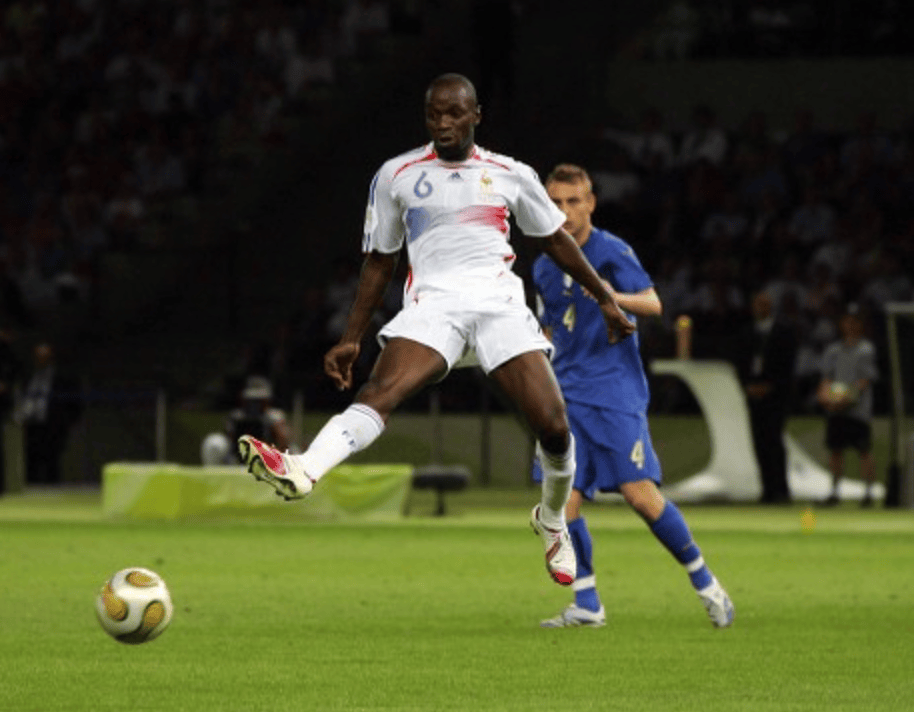
Though DR Congo scored its first-ever World Cup goals and points only this summer, it is far from the first time Congolese players have made a major impact at the FIFA World Cup. At the 2022 tournament, 11 players of Congolese descent represented other national teams. In 2018, Blaise Matuidi, Steve Mandanda, and Presnel Kimpembe, all of Congolese heritage, lifted the World Cup as members of the victorious French squad. Kinshasa-born Claude Makélélé was a key figure in France’s star-studded teams of the 2000s, while Belgium’s golden generation would have looked very different without Romelu Lukaku, Vincent Kompany, Michy Batshuayi, Dedryck Boyata, and Youri Tielemans.
Yet before 2026, it had been 52 years since the Congolese national team itself had appeared at a World Cup. Les Léopards came agonizingly close to ending that drought on multiple occasions. They finished just one match short of qualification for both the 2018 and 2022 tournaments, and they advanced all the way to the semifinals of the 2023 Africa Cup of Nations (AFCON) before narrowly losing to eventual champions Côte d’Ivoire. Their home ground, the Stade des Martyrs, witnessed numerous heartbreaks, and when Senegal scored a late winner there in September 2025 to defeat Les Léopards, many assumed DR Congo would once again fall just short of a World Cup berth.
Geopolitically, DR Congo had endured tremendous hardship since 1974. Mobutu remained in power for more than three decades, and when he was finally overthrown in 1997, the country was once again plunged into conflict. Throughout its history, Congo’s vast reserves of highly sought-after resources, including gold, coltan, copper, and rubber, have often proven to be a curse. Foreign powers and regional actors have repeatedly intervened in Congolese affairs, often seeking influence over the country’s mineral wealth. As a result, Mobutu’s fall did not bring lasting peace. Instead, it marked the beginning of another devastating chapter in the country’s history.
The Second Congo War drew in dozens of armed factions and multiple African states, particularly Rwanda and Uganda, in a struggle over territory, influence, and access to Congo’s immense mineral wealth. The conflict became known as “Africa’s World War.” More than five million people are estimated to have died as a result of the fighting and its humanitarian consequences. Although the war officially ended in 2003, violence has persisted through shifting alliances of splinter groups, militias, and foreign-backed insurgencies, particularly in eastern Congo.
As Les Léopards entered the CAF playoffs that November, their homeland once again found itself in the midst of war. Earlier that year, the Rwandan-backed M23 insurgency seized eastern Congo’s largest cities, Goma and Bukavu. In 2025 alone, more than 9.7 million people were displaced by the violence as various foreign-backed armed groups captured territory, seized mining operations, and continued exploiting the region’s mineral wealth. The crisis has been further intensified by widespread corruption within the Congolese state, disputed elections, a steady flow of weapons into the region, and repeated Ebola outbreaks.
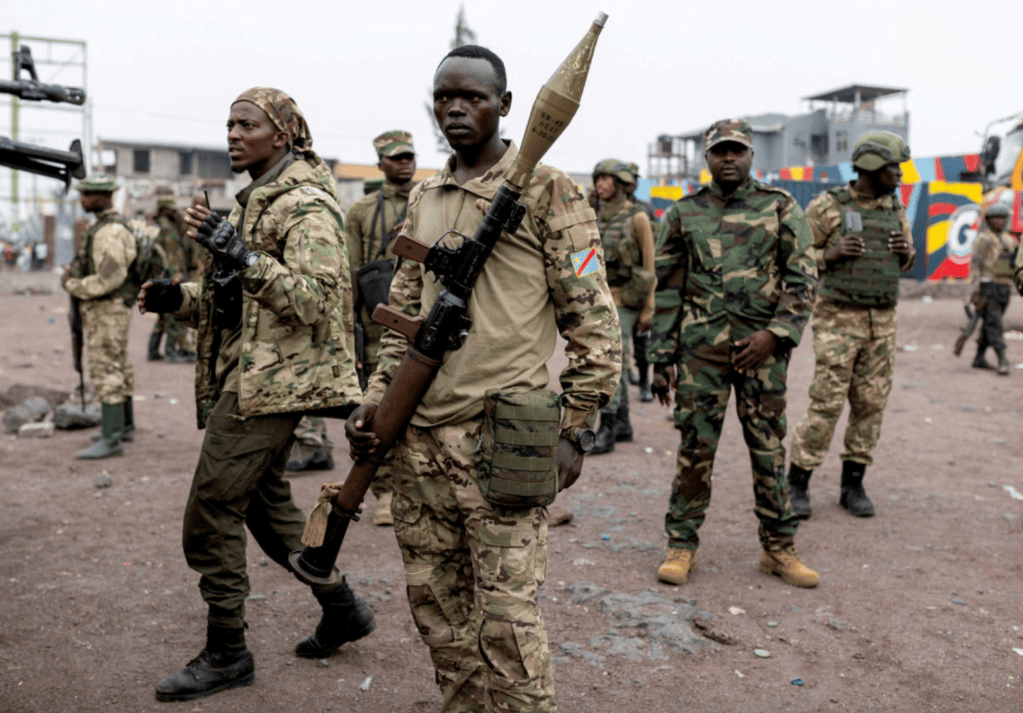
Yet against the backdrop of these hardships, the national team began to inspire hope. DR Congo stunned many observers by eliminating favorites Cameroon and Nigeria to reach the FIFA Intercontinental Playoff. There, then-Burnley striker Axel Tuanzebe rose highest to meet a corner kick in extra time against Jamaica, sending DR Congo to its first World Cup in more than half a century.
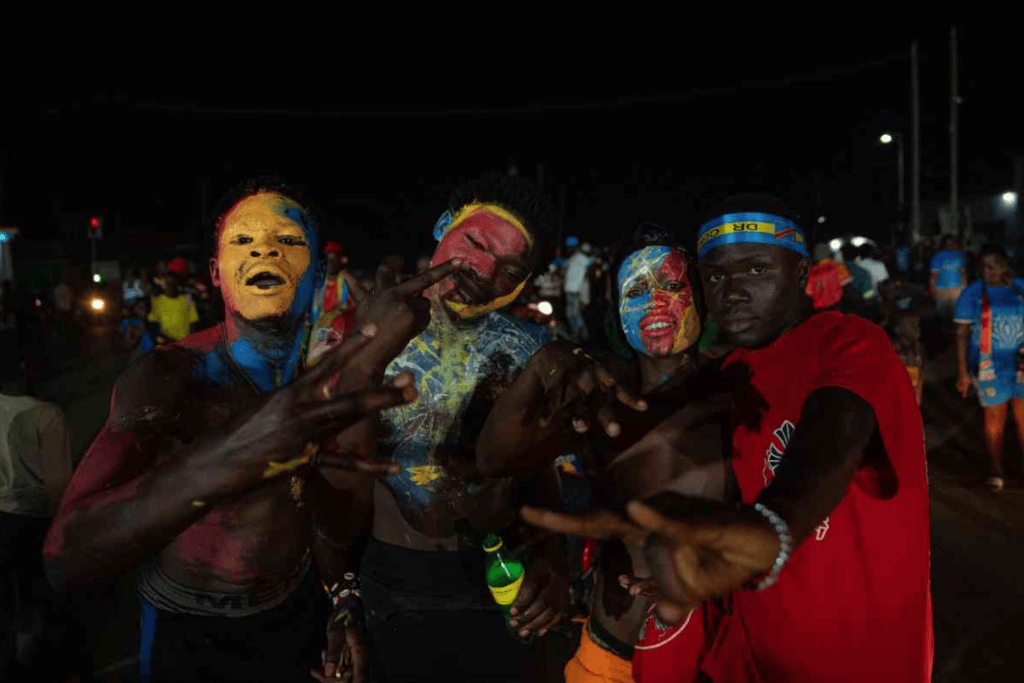
The achievement sparked celebrations across the country. Fans poured into the streets not only in Kinshasa but also in Goma and other communities in the rebel-controlled east. For a brief moment, regions divided by conflict found themselves united behind a common cause.
The exploits of Les Léopards have become a source of unity and a welcome respite for Congolese citizens across the country. A journalist in Goma reported that local rebel authorities encouraged residents to support the national team during the World Cup qualification campaign. Meanwhile, a schoolteacher in the eastern city of Bunia, Tuanzebe’s hometown, described how national team matches had galvanized local pride:
“On the day of the football they don’t do that [enforce curfew]. The day of the football game you can see people working anytime they need without being disturbed… When there is a match, you can see people wearing the jerseys and scarves. Everyone is involved, even though we’re so far. We are Congolese.”
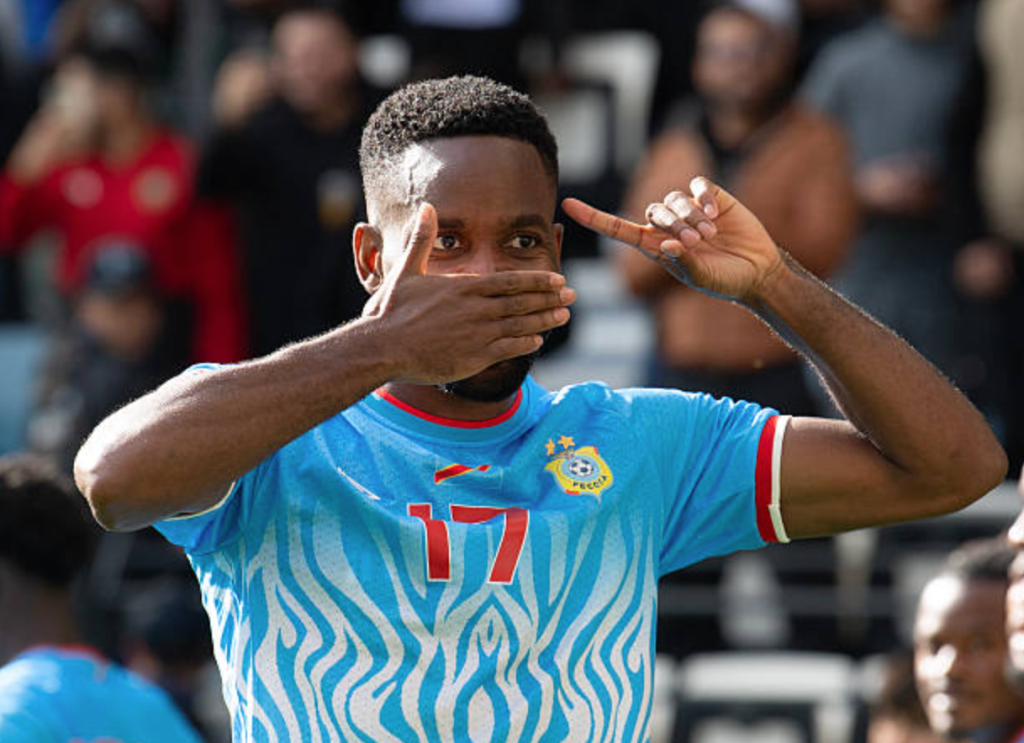
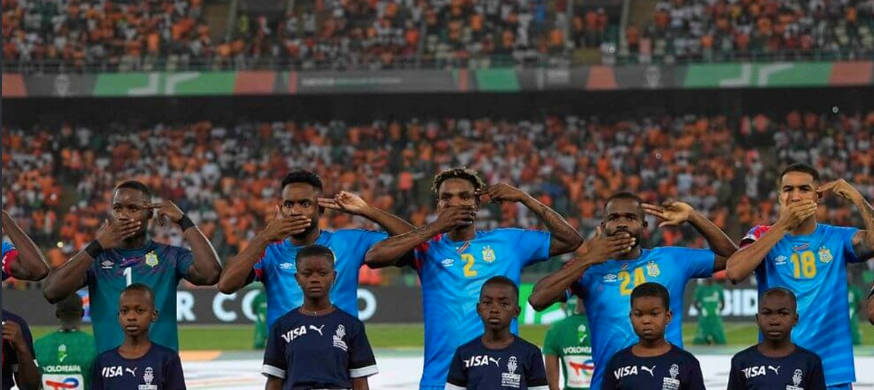
The players themselves have recognized the influence they possess and have used their platform to draw attention to the suffering of their countrymen. When Cédric Bakambu scored during the 2025 AFCON, he celebrated by covering his mouth and pantomiming a gun being held to his temple in solidarity with victims of the conflict in eastern Congo.
The gesture would take on even greater significance at the 2023 Africa Cup of Nations. Before their semifinal against Côte d’Ivoire, Les Léopards lined up for the national anthem, Debout Congolais. Rather than sing, the players silently performed Bakambu’s gesture in protest over the world’s limited attention to the violence unfolding in eastern Congo. Afterward, head coach Sébastien Desabre explained the demonstration: “A national football team is a driving force for a nation, and this evening, it was also our duty to share what’s happening in the East.”
Writing Their Story with a Black Pen
Following Les Léopards’ victory over Uzbekistan which guaranteed their passage to the next round, Yoane Wissa gave an emotional interview to AFP exclaiming:
“We are a proud country. We are proud people. We love our country. We love our national team. We love what we represent. I think tonight showed that what it means for us is just to fight no matter what. It is not easy in our country. There is a war in East Congo. Every day, every time we wear this shirt, we think about them. That is why tonight, what we show is just to say that guys, no matter what, we need to keep going. Because we want peace and for them, I just say ‘thank you’. Thank you because we came from far. We came from nothing to be here. Now we write our story with a black pen and we need to be proud.”
Beyond a simple victory on the field, and beyond serving as a symbol of resilience during a time of conflict, the team’s success represents a reclamation of a unifying national passion. The fimbu celebration demonstrates how a nation can reclaim even the darkest chapters of its history and transform them into a source of pride. Through its diversity, the squad ensures that Congolese people at home and in its vast diaspora, can see themselves reflected in the national team. Through their platform, the players have drawn international attention to the violence and hardships facing their compatriots. In doing so, Les Léopards are presenting to the world a nation that is determined to quell the ghosts that have haunted them.

 Explaining Offsides
Leave a comment