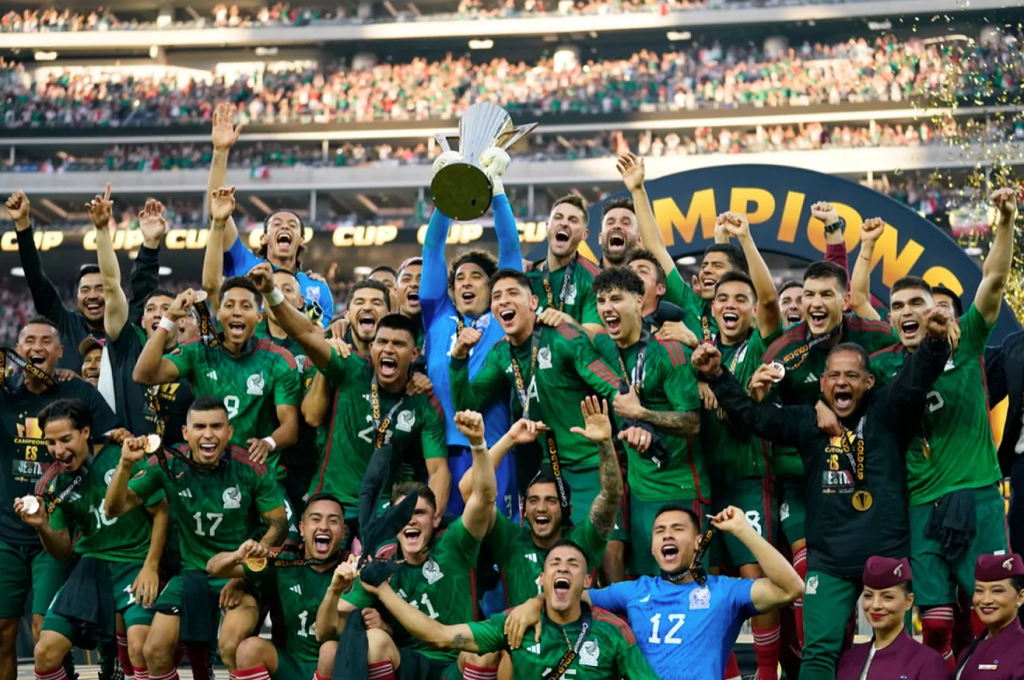
When the final whistle blew at the Estadio BBVA in Monterrey, Mexico, on March 31, 2026, players on the Iraqi national team sprinted into each other’s arms in jubilation. With their 2-1 victory over Bolivia, Iraq had qualified for its first World Cup in four decades. Iraqi fans in the stands would spend the evening celebrating a momentous and incredible moment for their country. But they did not do so alone.
Many Iraqi fans took to social media to praise the hospitality and warmth of the Mexican people, many of whom had adopted Iraq as the team they would support for the evening. Videos circulated of Mexican fans swapping shirts with Iraqi fans and chanting “Vamos Irak” and “Irak, dale Irak.” Another video showed hundreds of Mexican and Iraqi fans dancing together in the streets while singing the popular folk song Cielito Lindo (“Lovely Sweet One”), which is frequently sung during Mexico matches. Many online praised the Mexican fans for their warmth towards their Iraqi visitors, particularly in contrast to their treatment at Dallas International Airport where, days earlier, a man had torn down a banner and flag belonging to Iraqi fans traveling to Mexico for the match in an appalling display of intolerance.
While these joyous displays from Mexican fans are likely emblematic of the welcoming hospitality of the Mexican people, it is also possible that locals felt a sense of kinship with Iraqi fans due to their shared struggles. Both nations have had to battle negative perceptions in the Global North. Over the years, Iraq has rarely been in the news for positive reasons, instead featuring in headlines about a brutal dictatorship, wars involving Western nations, and ongoing insecurity caused by armed Islamist groups, most notably the Islamic State. Mexico, meanwhile, frequently appears in media coverage because of its struggles with cartel violence, economic instability, and migration. Both nations are also hoping to use this summer’s World Cup to project a more positive image of their countries, cultures, and people.
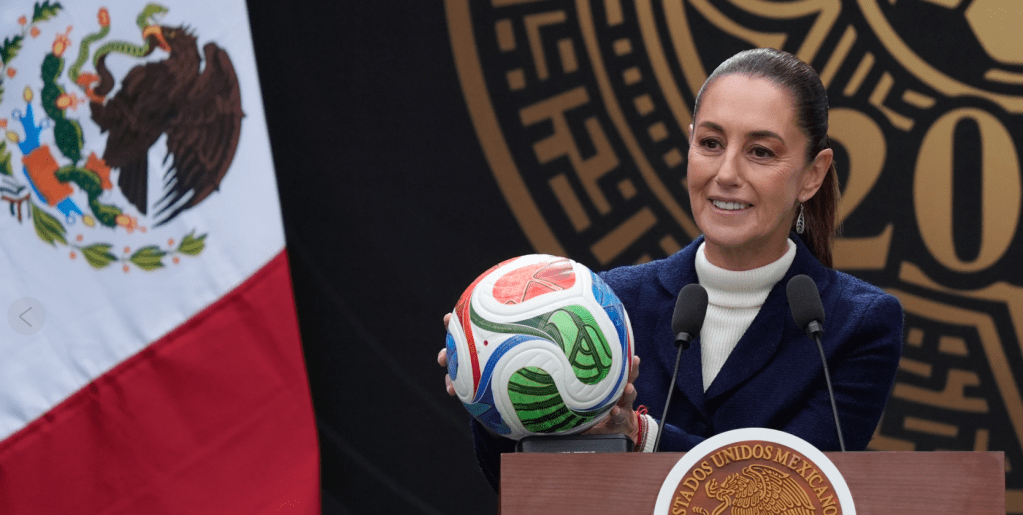
Mexico, in particular, will be under the global spotlight. Hosting the World Cup for an unprecedented third time, the North American nation will be looking to capitalize on the opportunity to present itself as a prosperous, safe, progressive, and culturally vibrant country as it opens its doors to the world.
Mexico, and particularly its president, Claudia Sheinbaum, will be feeling the pressure not only to counteract misleading stereotypes, but also to demonstrate that the country is making meaningful progress in addressing genuine threats to national security and regional sovereignty. This week, through the lens of soccer and the World Cup, Explaining Offsides will explore the cultural and geopolitical challenges that this nation of more than 130 million people is striving to overcome, and the image that Mexico hopes to project to the world this summer.
Heated Environments
It is important to state at the outset that this article will not focus heavily on the politically charged discourse between the United States and Mexico, nor will it spend much time examining cultural tensions between the two neighboring countries. This is for two reasons:
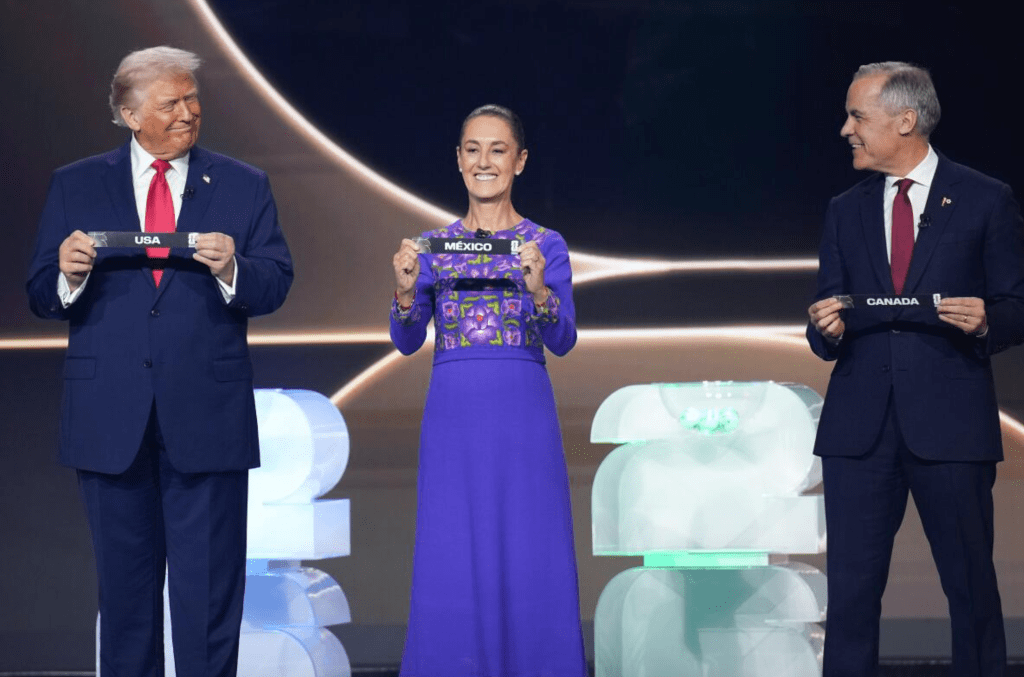
First, there will be an abundance of news outlets reporting on rhetoric directed towards Mexico, especially from the White House and President Trump’s support base in the United States, before, during, and after the World Cup.
Second, it is important to decouple existing “USA vs. Mexico culture war” narratives from more objective reporting on Mexican geopolitics so that a genuine discussion can be had about Mexico’s ability to co-host the FIFA World Cup. This is critical because I want to avoid praise for Mexico appearing as a simple rebuttal to predominantly right-wing narratives about the country, while also ensuring that legitimate criticisms of Mexico’s handling of various security and cultural challenges are not dismissed as a list of GOP talking points.
Though far from the lawless conflict zone that it is sometimes portrayed to be in certain corners of American society, Mexico does face significant security and cultural challenges that make many observers, including those with genuine admiration for the country, nervous about the Mexico that will be on display during the tournament.
In March 2025, the Mexican government came under fire when the trade union Building and Wood Workers’ International was denied access to the Estadio Azteca in Mexico City to inspect labour conditions during its pre-tournament renovations. The organization accused FIFA and the Mexican government of shirking their responsibilities to protect laborers. International observers are particularly sensitive to worker protection violations following scandals that have plagued previous editions of the tournament, and Mexico therefore needs to ensure that similar concerns do not also taint its hosting efforts.
Inside these stadiums, many observers familiar with the rituals of Mexican supporters will be listening nervously for one particularly unsavory and offensive chant that remains popular among a small but vocal minority of fans. Over the last 25 years, a trend has emerged, particularly during Mexico national team matches, in which supporters yell the slur “p*to” while an opposing goalkeeper takes a goal kick. Although the meaning and translation of the phrase remain debated because the slur can carry multiple meanings in Spanish, most observers agree that it is best translated as “gay male prostitute” and is frequently used to demean gay men.
The homophobic chant has become an embarrassing stain on Mexican soccer fandom and has even resulted in punitive action. During Mexico’s 3-2 loss to the United States in the final of the 2021 CONCACAF Nations League in Denver, loud chanting of the slur by Mexican supporters resulted in the match being briefly halted while announcements were made throughout the stadium pleading with fans to cease the chant.
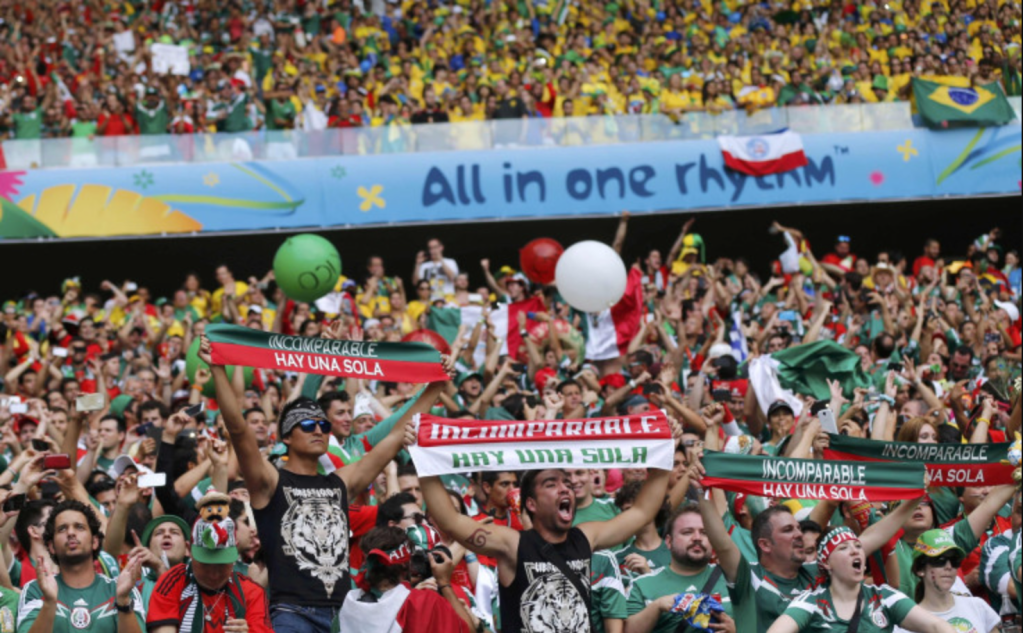
This incident, along with a similar occurrence during a pre-Olympic tournament in Guadalajara, resulted in Mexico’s first two home matches of 2022 World Cup qualifying being played behind closed doors. During the 2018 World Cup in Russia, FIFA fined the Mexican Federation $10,000 for the use of the chant during its opening victory over Germany, leading Mexican players such as Javier “Chicharito” Hernández and Andrés Guardado to publicly condemn its continued use.
The response to these efforts to stamp out the homophobic slur has been criticized by many LGBTQI+ groups in Mexico as inadequate. Claudia Pedraza, a specialist in gender and feminist issues in Mexico, has argued that threats of fines, sanctions, closed-door matches, and even point deductions are ineffective because they more frequently frame the chant as “disrespectful” rather than homophobic, contributing to some fans doubting its offensiveness.
While some focus nervously on the chants in the stadiums, others will turn their attention to the conditions on the fields below. Climate and temperature have been frequent concerns surrounding this tournament. As I discussed in a previous article, the role that climate change is playing in soccer is becoming increasingly alarming and difficult to ignore. Following last summer’s FIFA Club World Cup, which gained notoriety for its brutally high temperatures, many are concerned for the safety of players competing in the North American summer heat.
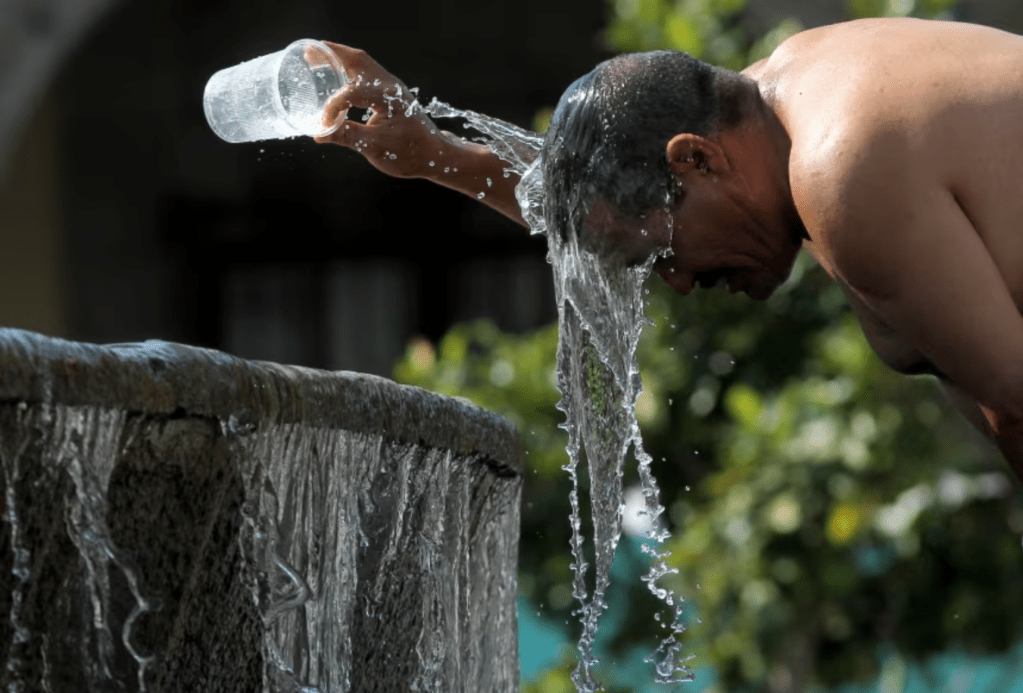
Monterrey is of particular concern, as its semi-arid climate makes it one of the hottest cities in Mexico, with average summer highs reaching the mid-90s°F (over 35°C). Other parts of Mexico, particularly Baja California, Sinaloa, and Guerrero, experience heatwaves that can push temperatures as high as 108°F (42°C). In response to these concerns, FIFA has implemented three-minute water breaks halfway through each half of all matches at this summer’s tournament.
Although Mexico City and Guadalajara tend to have cooler temperatures due to their higher elevations, they have frequently faced extreme weather and water shortages. Both cities have experienced droughts and declining groundwater reserves, leading to water shortages and increasing strain on water infrastructure. When rain does fall, there is a heightened risk of flooding because the soil is no longer able to absorb water as effectively as it once did. In October 2025, heavy rainfall caused floods and landslides throughout the country that killed more than 64 people and caused an estimated $750 million in damages.
Guadalajara Under Fire
While concerns surrounding climate, fan behavior, and labour conditions have been consistently cited as areas of concern leading into 2026, the issue that has remained most prominent is drug cartel violence. Mexico infamously has a long, bloody, and difficult history of combating violent organized crime, with armed groups such as the Sinaloa Cartel, Los Zetas, and the Jalisco New Generation Cartel (CJNG) contributing to more than 463,000 deaths since 2006. Despite the ongoing conflict, many had hoped that the World Cup would help dampen some of the violence.
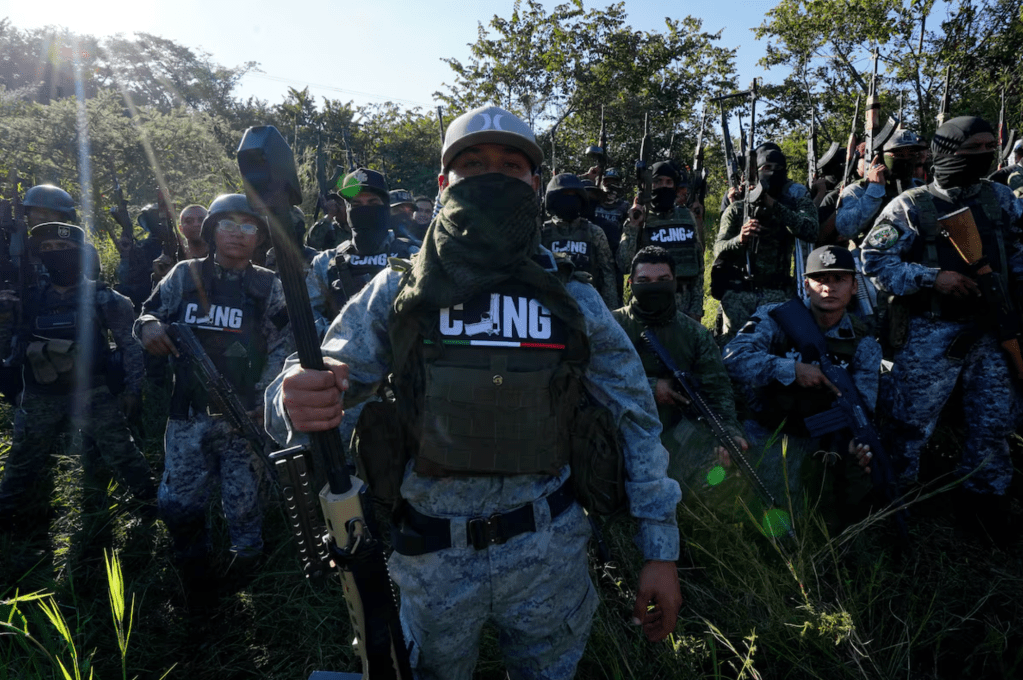
Although the three host cities, Mexico City, Monterrey, and Guadalajara, have experienced armed violence in the past, they generally encounter less organized criminal activity than other parts of the country. Much of the most prolific cartel violence has occurred either in less densely populated areas or in non-host cities such as Juárez, Matamoros, and Culiacán.
This sense of security was shattered in February 2026 when Mexican security forces carried out an operation that resulted in the death of CJNG leader Nemesio Oseguera Cervantes, better known as El Mencho. Prior to his death, El Mencho and the CJNG were widely regarded as among the most violent and brutal actors in Mexico’s criminal underworld. Their reaction to the death of their leader only reinforced that reputation, triggering a wave of violence and civil unrest across the country in late February.
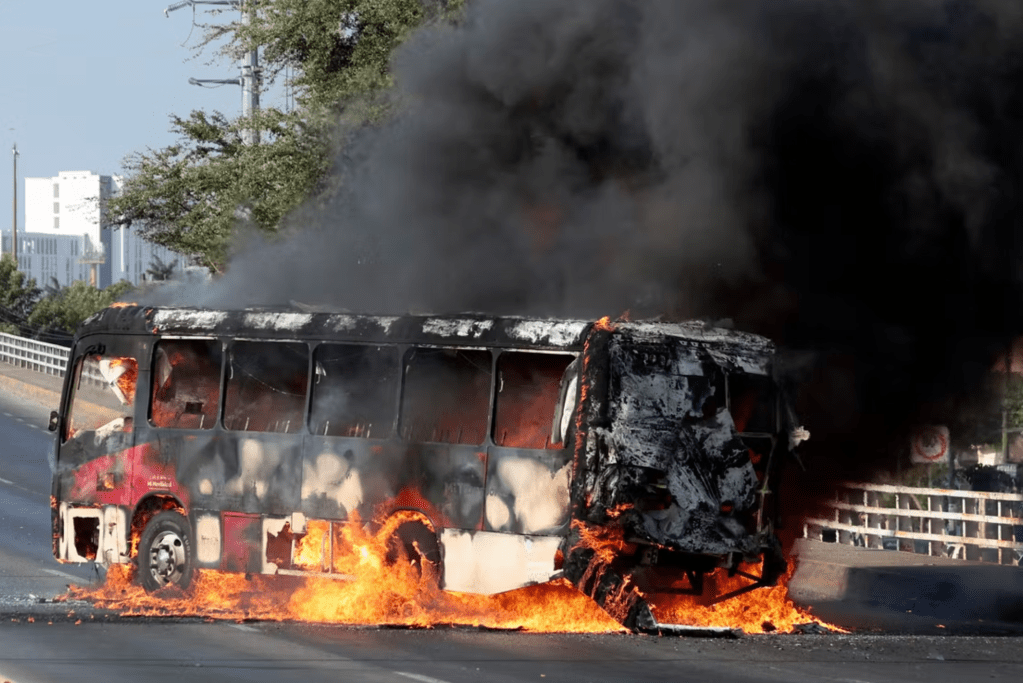
The cities of Puerto Vallarta and host city Guadalajara were among the hardest hit. CJNG members set off explosions, burned vehicles, and engaged Mexican security forces in gun battles, leading to dozens of deaths and leaving thousands of international visitors stranded for several days in Jalisco State as several airlines cancelled flights out of the embattled region.
Following the outbreak of violence, the suspension of four Liga MX matches, and a mass shooting at a soccer field in Guanajuato the previous month that claimed 11 lives, media outlets and international observers around the world questioned the ability of Guadalajara, which will host four matches, and Mexico as a whole to safely host the tournament. In response, FIFA President Gianni Infantino reaffirmed his confidence in Guadalajara’s suitability as a host city, while the Mexican government announced the launch of Operation Kukulkán, which will deploy 99,000 security personnel for World Cup matches in Mexico.
The security situation in Guadalajara has stabilized since the end of February, and all subsequent matches at Estadio Akron have taken place without incident. Nonetheless, the events of early 2026 have left some international observers nervous about matches taking place in Mexico.
A New Path Forward
In 2024, Mexican voters elected environmental scientist and former Head of Government of Mexico City, Claudia Sheinbaum Pardo of the MORENA party, as Mexico’s 66th president, making her the first woman and first person of Jewish heritage to hold the office. Though a monumental moment for the North American nation, many believed that Sheinbaum’s leadership would largely resemble that of her predecessor and mentor, Andrés Manuel López Obrador.
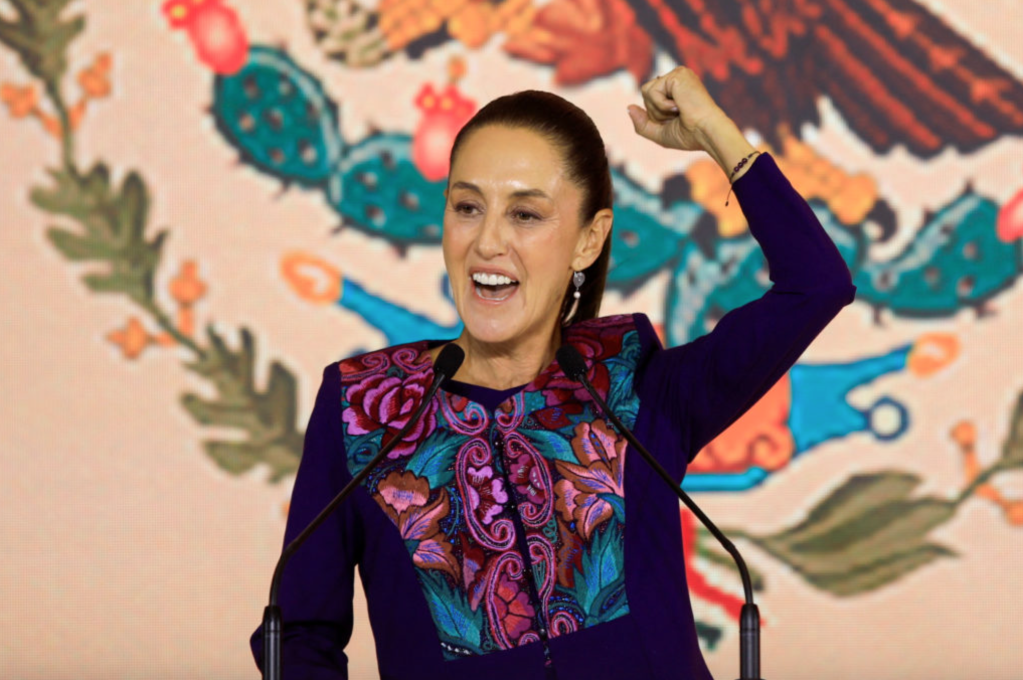
Though she continued many of López Obrador’s and MORENA’s policies, Sheinbaum quickly began implementing initiatives of her own. Chief among them were generous welfare programs, particularly for the elderly and impoverished; increased collaboration and communication between citizens and the police; and a trade agreement with the European Union that promises to diversify Mexico’s economic partnerships and reduce its reliance on trade with the United States.
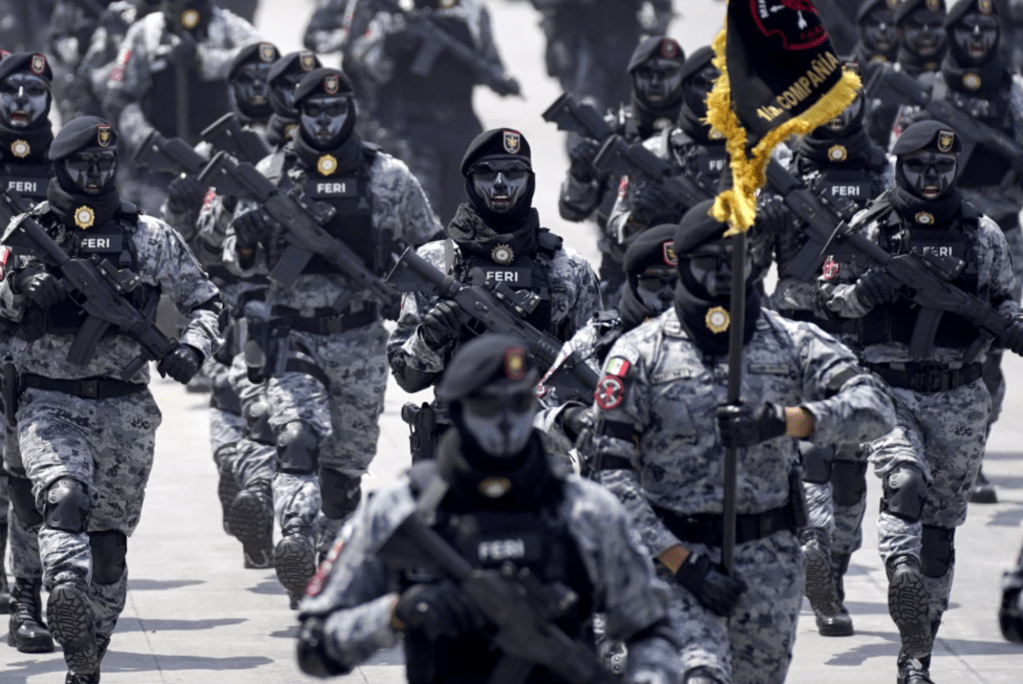
On the subject of crime, Sheinbaum quickly abandoned her predecessor’s “Hugs Not Bullets” strategy, which focused on social programs and avoided direct confrontation with armed groups. Although Sheinbaum’s security strategy continues to prioritize social programming and other nonviolent measures such as gun buyback programs, Mexican security forces have expanded their operations and more frequently engaged criminal organizations in violent clashes since she took office. Since assuming office, Mexico’s homicide rate has fallen by approximately 40%, dropping from 86.9 in September 2024 to 52.4 in December 2025, a result that mirrors the 40% decline in murders in Mexico City during her tenure as Head of Government.
Finally, in light of growing tensions between the Trump administration and the Mexican people, particularly regarding the threat of crippling tariffs levied against Mexico, Sheinbaum has taken a notably cool-headed approach toward the 45th president of the United States. She has largely maintained a careful, calculated, and level-headed demeanor toward the Trump administration while pushing back against American foreign policy when she deems appropriate. Many of Sheinbaum’s supporters point to this pragmatic diplomatic strategy as a key reason tensions between the neighboring countries have not boiled over further.
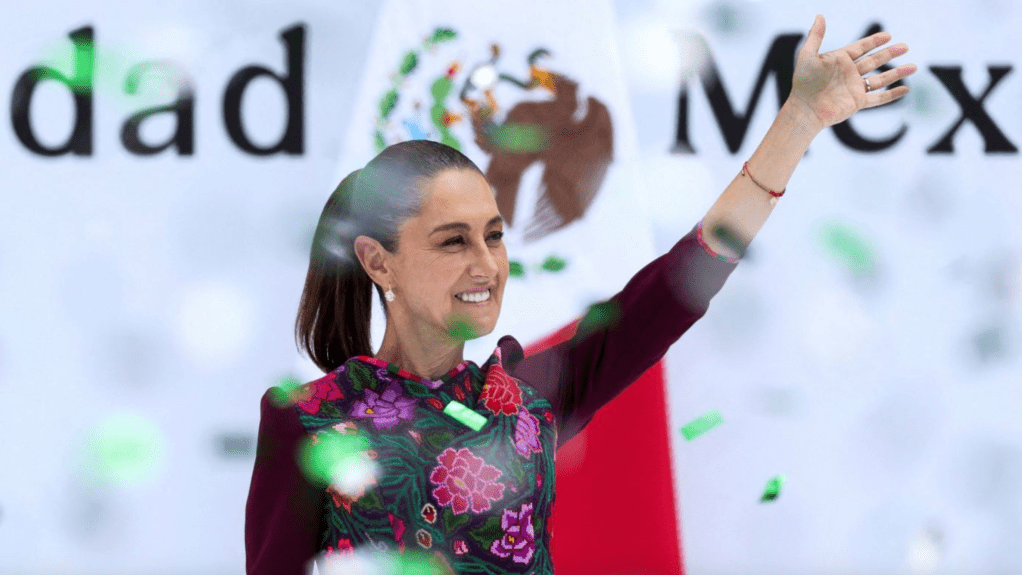
Sheinbaum’s pragmatic yet effective domestic and foreign policies have been widely praised by the Mexican public, and her 79% approval rating in August 2025 ranked her among the most popular presidents in Mexican history and among the most popular democratically elected heads of state in the world. She was named to TIME magazine’s list of the 100 Most Influential People and was named the fifth most powerful woman in the world by Forbes.
Stoppage Time
Despite Sheinbaum’s popularity, her presidency has not been without critics. Despite the apparent success of her policing initiatives, some community and human rights organizations have raised concerns that increased raids have contributed to civilian deaths.
On the day she took office, six foreign nationals were killed when the Mexican Army opened fire on a truck carrying more than 30 migrants near the Guatemalan border after soldiers allegedly heard gunfire coming from the vehicle. Three bystanders, including an eight-year-old child, were killed weeks later during an army shootout with cartel gunmen in Nuevo Laredo near the Texas border. Following the unrest in Jalisco, Sheinbaum also received criticism for seemingly provoking the CJNG through the operation that killed El Mencho.
Mexico is also facing a crisis of cartel-related disappearances, with approximately 130,000 people still missing as a result of kidnappings, including roughly 16,000 in Jalisco State alone, where Guadalajara is preparing to host four World Cup matches.
Some families of victims accuse the government of diverting attention away from locating missing persons in order to provide security for World Cup venues. Some have gone as far as forming civil society organizations that conduct search parties and excavate suspected burial sites based on tips from informants, a responsibility they believe Mexican authorities have failed to adequately fulfill.
While the 2024 election highlighted a moment of progress through the election of Mexico’s first female president, it also highlighted troubling trends in political violence, which has become endemic in the country’s democracy.
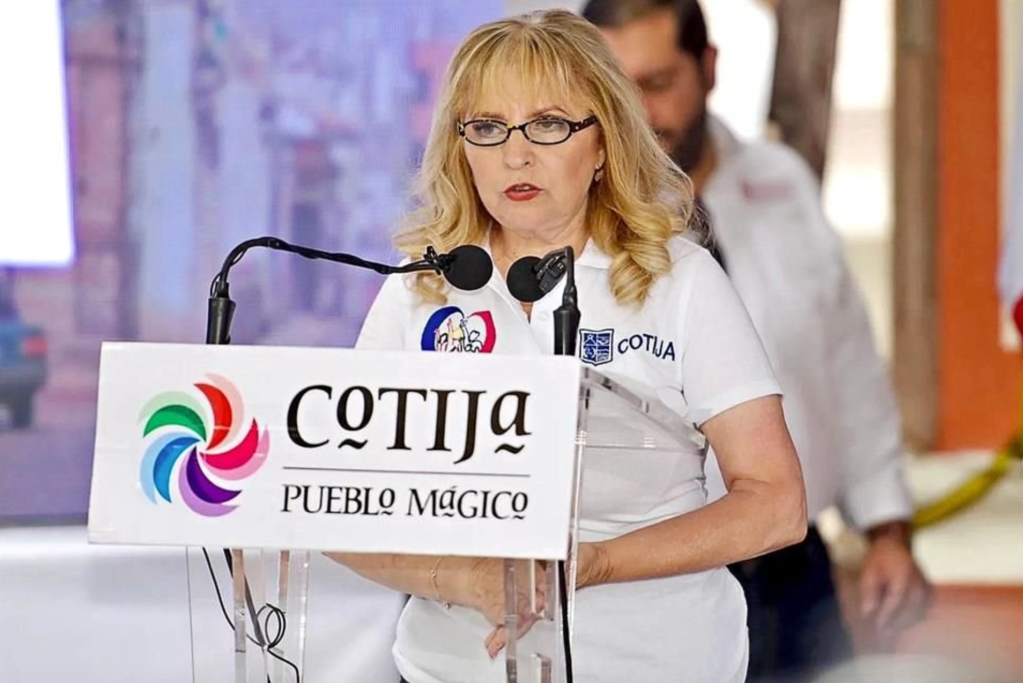
The 2024 election cycle was one of the most violent in Mexican history, with 37 candidates assassinated, 14 relatives of candidates murdered, and more than 800 reported incidents of political violence during the campaign. Additionally, Reporters Without Borders ranked Mexico as the deadliest country in the world for journalists in 2022, with 153 journalists slain since 2000, many of them killed because of their reporting on cartel activity in their communities.
As the world descends on Mexico for the World Cup, the global spotlight will shine not only on the country’s progress but also on its struggles. Although Mexico has made significant advances, it continues to grapple with deep-rooted challenges that will likely take generations to overcome.
Stoppage Time
As Mexico opens its doors to the world tomorrow, when the Mexican national team, nicknamed El Tri (“The Tricolor”), faces South Africa in Mexico City, many wonder which Mexico will present itself to the world: a nation of progress and peace, or a country beleaguered by social ills that it cannot seem to shake. However, if history tells us anything, it is that Mexico knows how to project an image of resilience, joy, and pride during the World Cup.
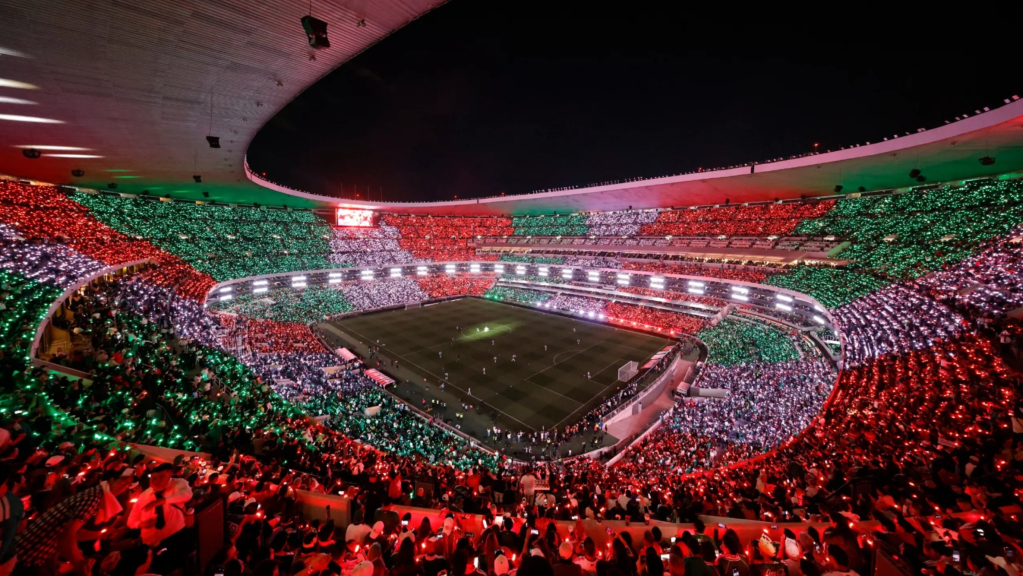
Mexico City’s Estadio Azteca is regarded by many soccer lovers as one of the cathedrals of the game, alongside London’s Wembley Stadium, Rio de Janeiro’s Maracanã, and Madrid’s Santiago Bernabéu. It has provided the stage for some of the greatest players in history to create their defining moments, with both Pelé and Diego Maradona hoisting the World Cup on its hallowed grass.
It bore witness to some of the most iconic moments in tournament history, from the “Game of the Century,” Italy’s 4-3 extra-time victory over West Germany in the 1970 World Cup, to Maradona’s “Hand of God” goal and mesmerizing run against England in 1986, a strike that many consider the greatest goal in World Cup history. Perhaps these iconic moments are made possible by the stadium’s famously electric, almost mythical atmosphere.
The stadium also has a knack for amplifying the passion of Mexican fans. Throughout its history, the venue has magnified the voice of El Tri supporters, and that noise has often provided the national team with a tremendous home-field advantage. Mexico’s best-ever FIFA World Cup performances were its quarterfinal appearances in 1970 and 1986, the two occasions on which it hosted the tournament. El Tri also won the 1999 FIFA Confederations Cup on home soil, as well as the 2011 FIFA U-17 World Cup.
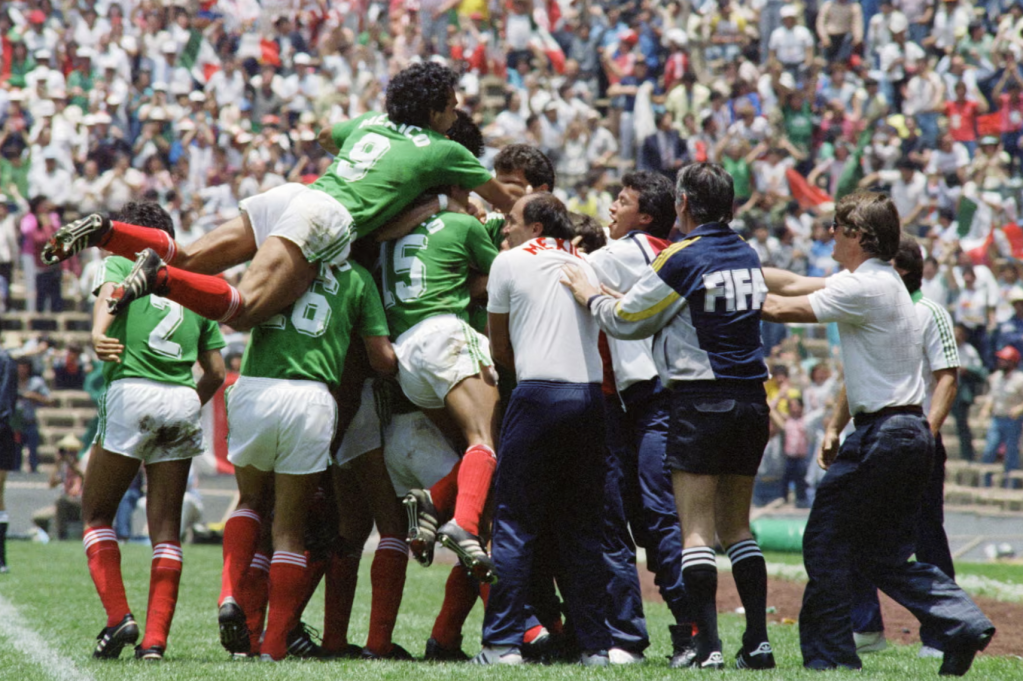
The United States men’s national team has famously struggled to play at Azteca, with Landon Donovan comparing the experience to “playing in a beehive.” To date, the United States has won only one of its 19 matches against El Tri at Azteca, a 1-0 victory in 2012. South Africa, therefore, faces an enormous challenge in tomorrow’s opening match.
Yet this summer provides Mexico with an opportunity not only to succeed on the field, but also to demonstrate its resilience off it. Indeed, Mexico faced significant challenges when it hosted the World Cup in 1970 and 1986. In 1970, the nation was still reeling from a series of strikes, protests, civil unrest, and an armed conflict between the right-wing government and leftist guerrillas that culminated in the 1968 Tlatelolco Massacre, when Mexican security forces gunned down hundreds of student protesters in Mexico City.
Then, nine months before the 1986 World Cup, Mexico City was struck by an 8.1-magnitude earthquake that killed tens of thousands, destroyed thousands of buildings in the capital, and called the country’s ability to host the tournament into question. Yet each time, Mexico rebounded and delivered a legendary spectacle before a global audience.
This is the Mexico that much of the world hopes to see, and it is the image that the nation’s resilient people are eager to present. Amid the noise surrounding geopolitical tensions, insecurity, and uncertain futures, the people of Mexico City, Monterrey, and Guadalajara will likely showcase the unity, resilience, and joy that have long defined their country. As chants of Cielito Lindo echo through some of the world’s most revered stadiums, Mexico will once again have an opportunity to tell its story to the world on its own terms.

 Explaining Offsides
Leave a comment