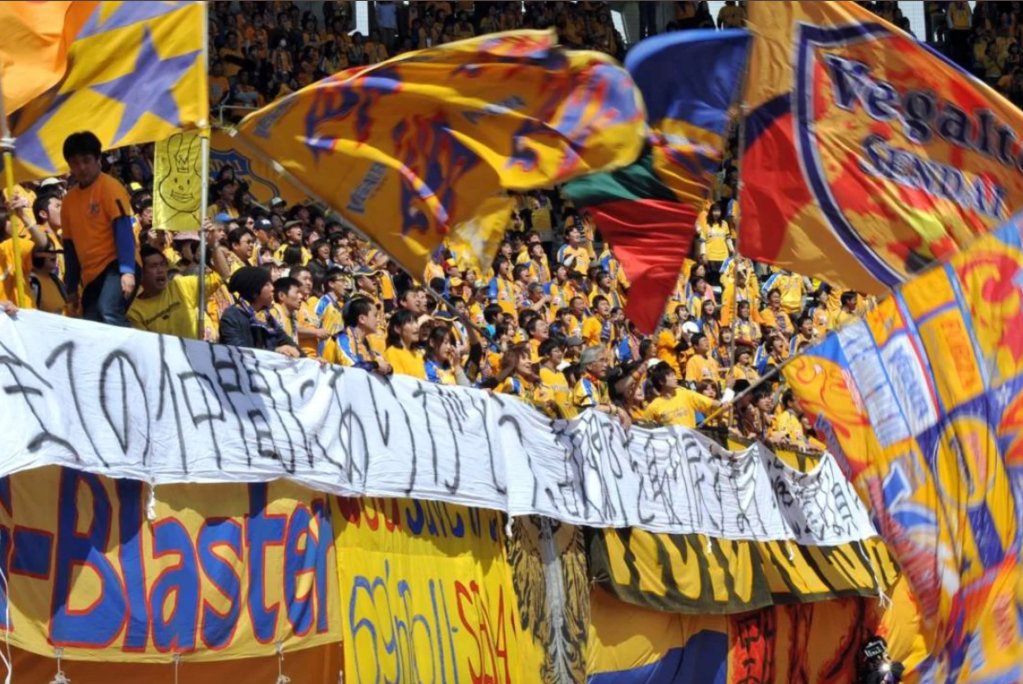
As fans packed the Kawasaki Todoroki Stadium in the Greater Tokyo area on a rainy April afternoon in 2011, there was a mixture of excitement and dread. As Kawasaki Frontale and Vegalta Sendai took the field in this J League clash, there was jubilation at the return of Japan’s premier soccer league, which had been suspended for over a month. The league, like all of Japanese society, had come to a screeching halt when a powerful earthquake and tsunami struck Japan, claiming tens of thousands of lives.
While soccer fans around the ravaged nation welcomed the return of a beloved weekly tradition, a critical component of their recovery and a distraction from the surrounding devastation, there were also many who were brutally reminded of what they had lost. There was dread particularly for the traveling fans of Vegalta Sendai, a team located in Miyagi Prefecture, which had been the hardest hit by the disaster with over 10,000 of its residents killed. As Vegalta Sendai supporters took their seats, many grimly searched the away section to discover whether or not certain community members had survived.
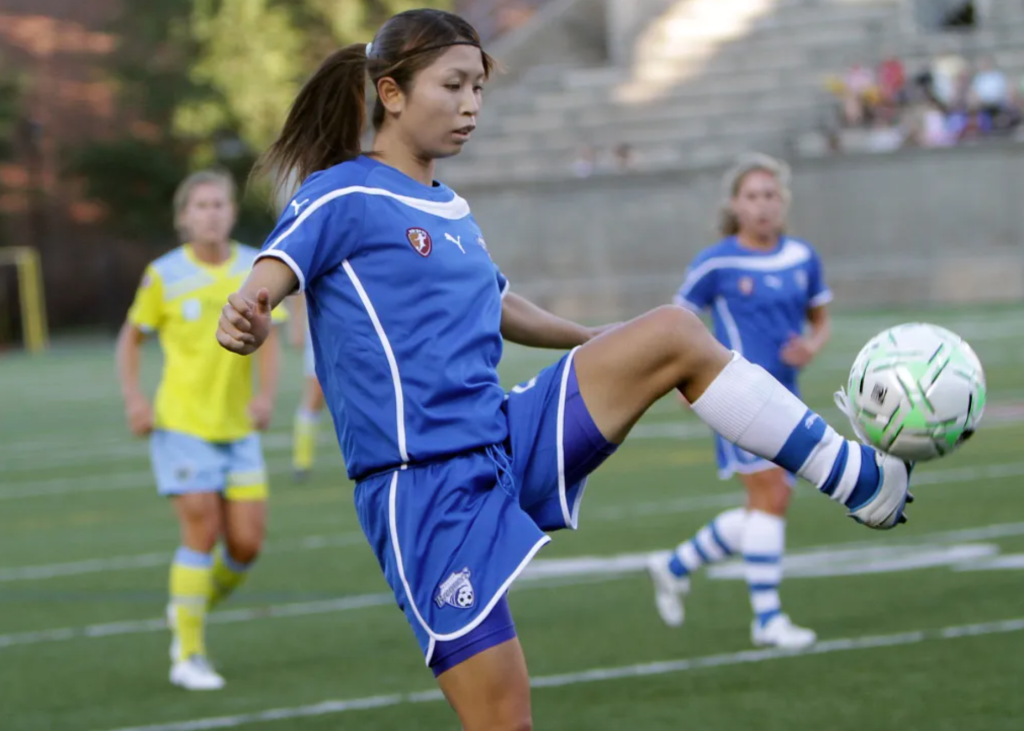
Several thousand miles away in Massachusetts, seemingly worlds away from the devastation, Aya Sameshima, a 23-year-old left back from the Kantō region of Japan, made her way to practice for the Boston Breakers. She had only arrived weeks earlier in the United States as a sort of footballing refugee. Prior to the disaster, she had starred for Japan’s women’s national team (nicknamed Nadeshiko, a flower that Japan regards as a symbol of femininity) and a local club team in Fukushima. The earthquake, tsunami, and resulting nuclear meltdown at the Fukushima Daiichi Power Plant forced her team to suspend the season, leaving its players to find new clubs, homes, and even jobs and sent Sameshima thousands of miles away from home.
In the wake of the tragedy, however, Japanese soccer bore witness to two remarkable journeys that would inspire the nation and the world. Vegalta Sendai went on a remarkable run through the J League that almost led them to a national championship. Then, just months after the devastation, Nadeshiko shocked the world by winning the 2011 FIFA Women’s World Cup, despite having never advanced past the quarterfinals in previous editions.
Both Vegalta Sendai and the women’s national team became global symbols of Japan’s recovery, resilience, and sense of community. Fifteen years later, Explaining Offsides recounts the story of these two inspirational squads and makes a case for the importance of soccer teams as community pillars, particularly in moments of crisis and tragedy.
Country Roads, Take Me Home
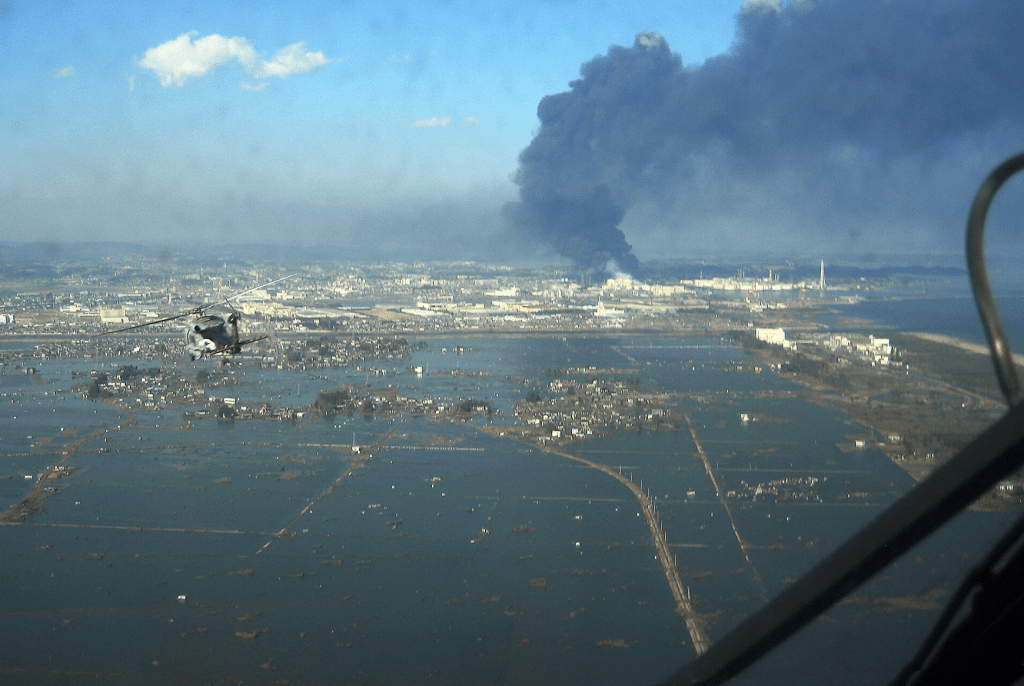
On March 11, 2011, a 9.1 magnitude earthquake shook the nation, claiming the lives of over 18,000 people, with several thousand more still listed as missing. Most were not killed by one of the largest earthquakes ever recorded, but by the tsunami that devastated Japan’s eastern coast with 90-foot waves that leveled towns as far as three miles inland. The city of Sendai registered 923 killed with over 30,000 homes completely destroyed; many tens of thousands more were displaced. Sendai is the capital city of Miyagi Prefecture, the region which saw the largest loss of life.
When the earthquake struck Sendai, midfielder Ryang Yong-gi was caught on the road as the shaking began to rattle the buildings lining the streets. He rushed home to collect his heavily pregnant wife; that night, the couple slept in their vehicle, fearful of their home collapsing from structural damage. New Vegalta signing Marquinhos was so traumatized by the devastation that he canceled his contract and returned to Brazil.
Despite the unfathomable grief, Vegalta Sendai and its fans stepped up to serve as a key community pillar. In the immediate aftermath, the club opened Yurtec Stadium to serve as a center for emergency supplies, with Vegalta supporters volunteering to organize and distribute food to those in need. Supporters’ club officials also played a pivotal role in the revival of local soccer by donating balls, cleats, and goals to smaller clubs in hard-hit communities.
During the recovery effort, players like Ryang Yong-gi and staff like manager Makoto Teguramori regularly donated their time to relief efforts or made public appearances to boost local morale. The team organized footballing schools for orphaned children and those in temporary housing. They also contracted local food vendors from devastated communities that relied on agriculture and fishing. This provided critical business to rejuvenate the local economy and helped assuage fears that locally sourced food might be contaminated.
For their part, Vegalta fans became online darlings for their infectious energy. Even before the tragedy, they were well known for their passionate singing in the stands, often adapting popular global songs into their own anthems. Vegalta fans even sold CDs of their chants, most notably their rendition of “Country Roads” by John Denver, to raise funds for local clubs. Following the resumption of the league, their singing became louder and more purposeful. Before that first match against Kawasaki Frontale, “Country Roads” reverberated around the stadium, humming in a low, almost dirge-like hymn. Vegalta fans then unveiled a banner which stated: “Thank you for all [our] friends. We do not lose until we regain a hometown.”
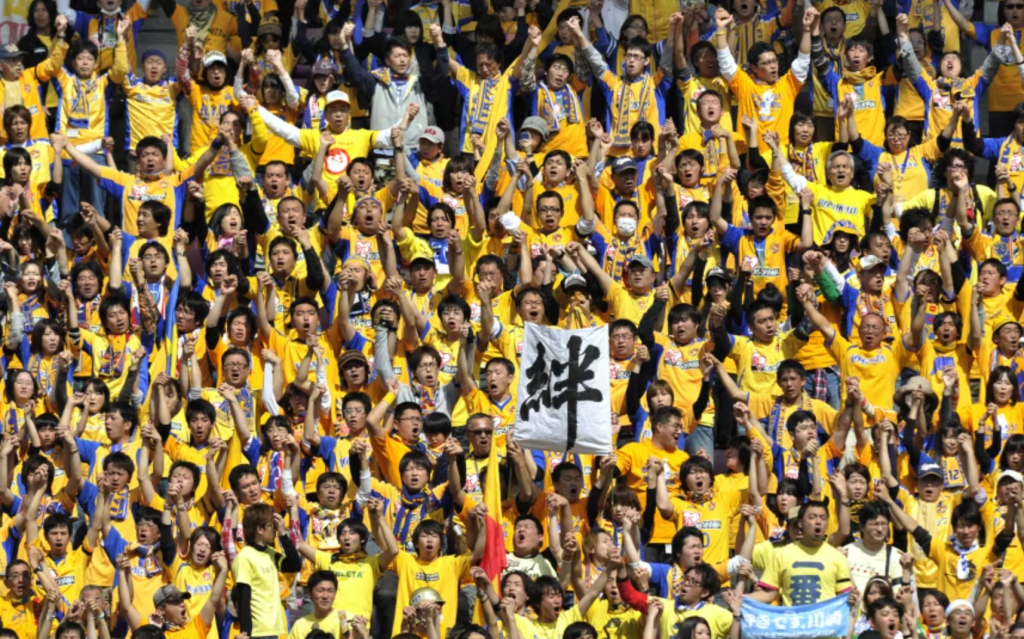
Despite going down 1-0, Vegalta came from behind to win the match with a late header from Jiro Kamata that sent the away fans into delirium. Even the home Kawasaki fans were heard chanting in support of their grieving counterparts. Having previously been considered a “yo-yo club,” Vegalta Sendai entered the 2011 season with the modest goal of simply not being relegated to the second tier. However, the team went undefeated in the 11 matches following the disaster, a streak which coincided with the reopening of Yurtec Stadium, which the J League president had previously described as being “in ruins.”
Vegalta finished the season in fourth place, their best performance ever at the time. The following year, they would go even further, finishing second in the 2012 J League season.Vegalta Sendai’s performances served as a marker for the region’s recovery. As one Sendai fan put it, “During the tsunami year, Vegalta and its play gave us energy, whether they won or lost.” Another described how matches gave them a place where they could scream, shout, and let loose the pain of rebuilding their lives. The club’s success put forward the image of a region that would not only survive, but recover with strength.
Full-Time Heroines
When 45-foot waves reached the town of Ōkuma, they rushed into the Fukushima Dai’ichi Nuclear Power Plant, disabling four out of the six generators. Without power, hydrogen and other radioactive gases built up, leading to explosions around three of the reactors. These explosions released hazardous amounts of radioactive material into the skies of Northern Honshu, forcing the evacuation of thousands of residents within 12 miles of the disaster site. Despite the lifting of many evacuation orders and the slow return of residents to local villages, some areas closest to the plant remain abandoned, still deemed “difficult-to-return zones” due to continued radiation levels.

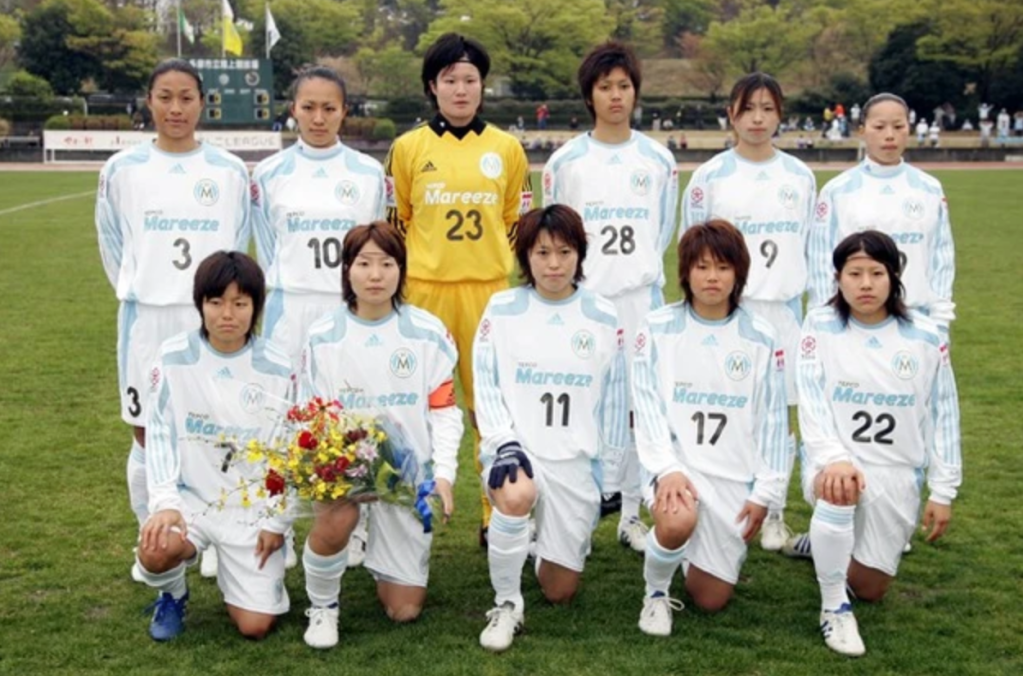
Fifteen miles south of the power plant, Japan’s national training center, J-Village, was converted into an operations center for disaster relief and recovery efforts. Despite being damaged itself, the center housed hundreds of emergency vehicles and thousands of members of the Japan Self-Defense Forces, firefighters, and volunteers. J-Village had also served as the home stadium for the local women’s club, TEPCO Mareeze. Going into 2011, TEPCO Mareeze was one of Japan’s premier women’s clubs, having finished in third place in the national league. The squad featured national team stars like Karina Maruyama and Aya Sameshima. While Maruyama had left in 2009 to play in the United States, Sameshima was emerging as a rising young star in Japanese soccer.
TEPCO Mareeze had a unique setup: its players worked part-time in the company’s facilities. During this era of Japanese women’s soccer, teams required corporate sponsors to stay afloat, and most players could not earn enough to live off of playing soccer alone. TEPCO (the Tokyo Electric Power Company) was (and remains) Japan’s largest energy provider. From 8:00 a.m. to noon, players worked as administrative assistants or public relations representatives; they were then transported to J-Village in the afternoon for training. The TEPCO facility where many of them were employed? The Fukushima Dai’ichi Nuclear Power Plant.
When the disaster hit, the TEPCO team was thankfully a thousand miles southwest in Miyazaki for a pre-season training camp. However, with their home ground repurposed into an operational hub, the team was left without a home. TEPCO, facing billions of dollars in debt due to the disaster, was no longer able to support the team, and the club officially dissolved in September 2011. The players lost not only their club but also their homes and their jobs at the plant. Sameshima headed to the United States to continue her training, while most other players were taken in by a club that had just founded a new women’s team: Vegalta Sendai.
Entering the 2011 FIFA Women’s World Cup, Nadeshiko, much like the Vegalta Sendai men, were not seen as title contenders. Japan’s deepest previous run had been to the quarterfinals in 1995, and they had been eliminated in the group stage of the three subsequent tournaments. Given the devastation at home, there had even been internal discussions about pulling out of the tournament entirely.
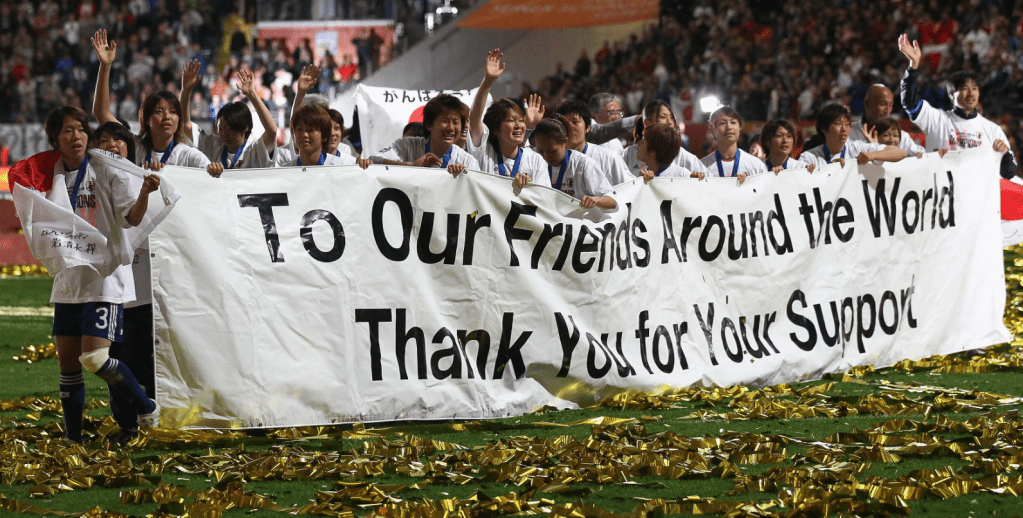
Yet, on June 27, 2011, Nadeshiko walked onto the field in Bochum and earned an inspiring 2-1 victory over New Zealand. Following the match, the team unfurled a banner that read, “To our friends around the world, thank you for your support,” and paraded it around the field. After a victory over Mexico and a loss to England, Japan advanced to the knockout stages for the first time in 16 years.
The story could have ended there as a successful show of resilience, especially since Japan was scheduled to face the two-time defending champions and hosts, Germany, in the quarterfinals. Most assumed this was the end of the road. However, after holding Germany scoreless into extra time, Maruyama, who had worked at the Fukushima plant for four years, snuck past the German defense and slotted home the winning goal from a tight angle. It was Germany’s first World Cup loss in 12 years.

After an emphatic 3-1 victory over Sweden in the semifinals, Japan faced the United States in the final. Japan had never beaten the U.S. in 22 previous attempts. In a back-and-forth final where Japan came from behind twice, Nadeshiko forced a penalty shootout. Two legendary saves from goalkeeper Ayumi Kaihori and a winning penalty from Saki Kumagai secured Japan’s first-ever world championship.
Fans who stayed up for the 3:45 a.m. kickoff poured into the streets nationwide in celebration. Upon their return, the team was greeted by swarms of fans at Narita Airport. Prime Minister Naoto Kan praised the team for “bringing courage” to the nation, calling the victory the “greatest gift” to Japan. In Sendai, one fan summed up the sentiment perfectly: “People are watching this team put in so much effort, and it encourages us to put that same effort into the reconstruction.” Like Vegalta Sendai, the women’s national team victory provided Japanese fans with a crucial lift as they rebuilt their nation
Return to Normalcy
Soccer is the most important of the unimportant things in life” is a quote often attributed to Pope John Paul II (though equally linked to former Italy coach Arrigo Sacchi). It signifies two concurrent, yet often contrasting, truths. In the case of Vegalta Sendai and the women’s national team, their victories didn’t construct new homes in Tōhoku, they didn’t decontaminate the villages of Fukushima, and they certainly didn’t fill the void left by over 18,000 lost souls. Sport cannot rebuild communities alone; it requires the concerted efforts of authorities and civic entities to carry out the healing process. Yet, it would be equally foolish to pretend that soccer served as merely a distraction. It provided supporters with a sense of ritual and routine, a space to gather as a community during a period where cohesion was crucial to recovery.
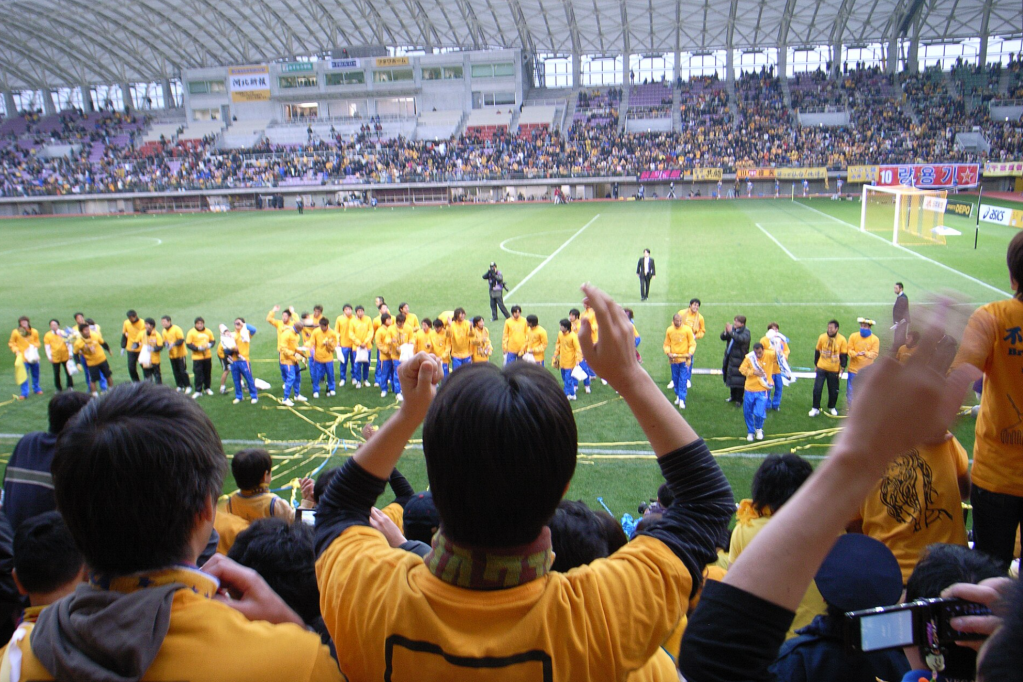
Vegalta Sendai serves as an excellent case study of how sports clubs and fans act as key pillars of their communities. This active participation in post-disaster relief is not unique to Sendai. Following the devastating 2023 earthquake in Türkiye and Syria, hundreds of players and fans from Istanbul’s “Big Three” club, Galatasaray, Fenerbahçe, and Beşiktaş, traveled to the disaster zone to aid relief efforts, with Galatasaray even allocating parts of their stadium to logistics operations. Similarly, during the early days of the COVID-19 pandemic, AS Roma donated tens of thousands of masks and ventilators to local hospitals. Today, most major clubs operate philanthropic entities, such as FC St. Pauli’s Fanladen, which provides homelessness support and refugee integration in Hamburg.
Vegalta’s engagement with Miyagi Prefecture’s recovery meant they were woven into the holistic rebuilding of the region. When they were successful on the field, their victories felt tied to their communities’ survival, restoring a sense of dignity and agency to a region in desperate need of spiritual fortitude. American sports fans may recall a similar morale boost provided by the New Orleans Saints during their 2006 playoff run to the NFC Championship as the city attempted to rebuild after Hurricane Katrina.

Even the simple act of resuming play can provide a sense of normalcy. The continuation of Vegalta’s season in the J League contributed to this return to regular community engagement which built resilience and nurtured shared social norms. The resumption of the Ukrainian Premier League following the 2022 invasion has allowed fans to maintain an outlet for expression and leisure despite the conflict. The Ukrainian Association of Football is even using soccer as a recovery mechanism for veterans coping with post-traumatic stress disorder. Ultimately, sport can become an anchor when communities face profound crises and traumas.
Ganbaro Nippon!
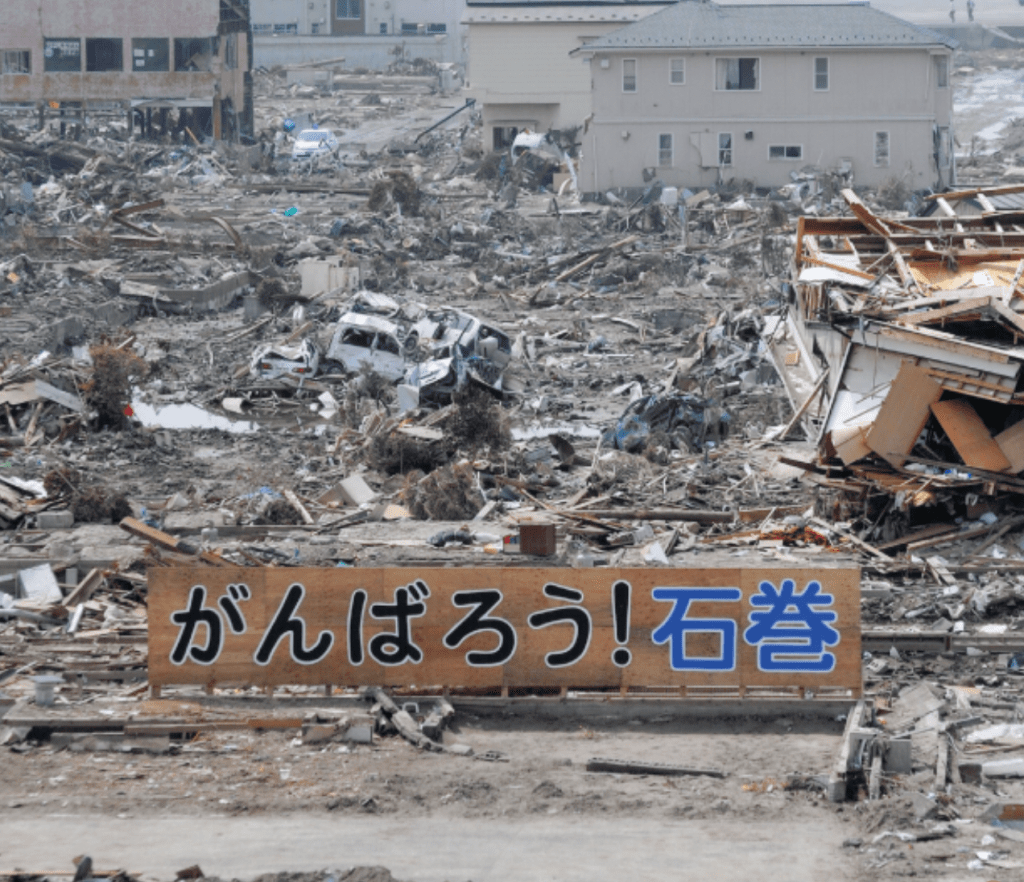
The success and impact of Vegalta Sendai and Nadeshiko demonstrates emphatically that hope is a powerful, contagious, and regenerative tool. Ishinomaki, a coastal town 30 miles east of Sendai, recorded the highest death toll of any municipality in Miyagi. In the heart of the rubble of his former neighborhood, a local resident erected a plywood sign with the exclamation “Ganbaro Ishinomaki!” (Hang in there, Ishinomaki!) inscribed on it. The image of this defiant sign jutting out of the wreckage became a symbol of Japan’s fighting spirit.
Another symbol of Japanese resilience is found in the traditional art of kintsugi, where broken ceramics are mended with liquid gold to create new, stronger, and more stunning forms of pottery. These two inspiring teams became part of that same tapestry of hope. Players and officials understood their power to support the relief effort; Vegalta’s manager stated, “It was our job to stand at the front lines of recovery.” Nadeshiko manager Norio Sasaki spoke of a “responsibility” to raise the spirits of his grief-stricken nation. When Saki Kumagai sank her winning penalty, Sasaki’s first thought was how “proud and happy the people back home would be in such a difficult time.”

 Explaining Offsides
Leave a comment