Content Warning: This article includes a brief discussion of self-harm. Please proceed with care. This article is dedicated to the memory of Mahsa Amini and Sahar Khodayar as well as the pursuit of women’s rights in Iran and everywhere.
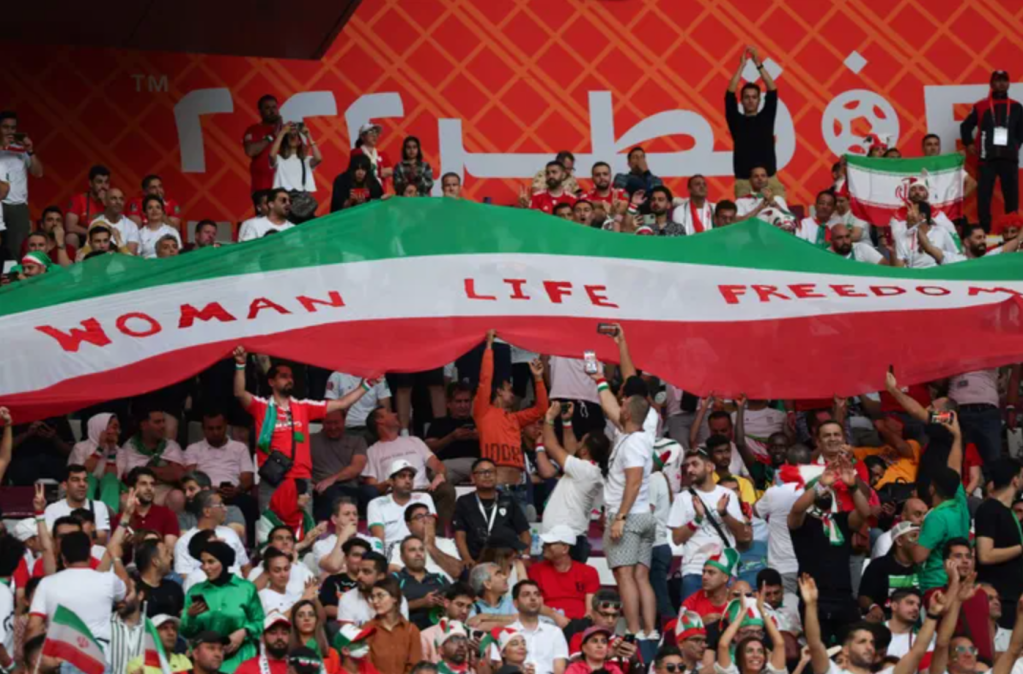
On November 21, 2022, at the Khalifa International Stadium in Al Rayyan, Qatar, the Iranian national team lined up against England for their opening match of the 2022 FIFA World Cup. It is customary before all FIFA-sanctioned international games for the two teams to line up next to each other and have their national anthems played. Typically, as the anthems are blared through the stadium, the camera pans across each player. Many of them are seen singing their anthem openly, reminding the world why soccer was a better career choice for them than signing a record deal. Normally, these images of singing soccer players will be spliced in with images of the crowd waving flags, singing loudly, and cheering their own national anthem. Indeed, when England’s God Save the Queen was played, the world witnessed the likes of Raheem Sterling, Declan Rice, and Harry Kane shouting the lyrics. Yet, when it was the Iranian team’s turn to sing Mehr-e Khavaran, the players would send shockwaves around the world by what they did—or rather did not do—next.
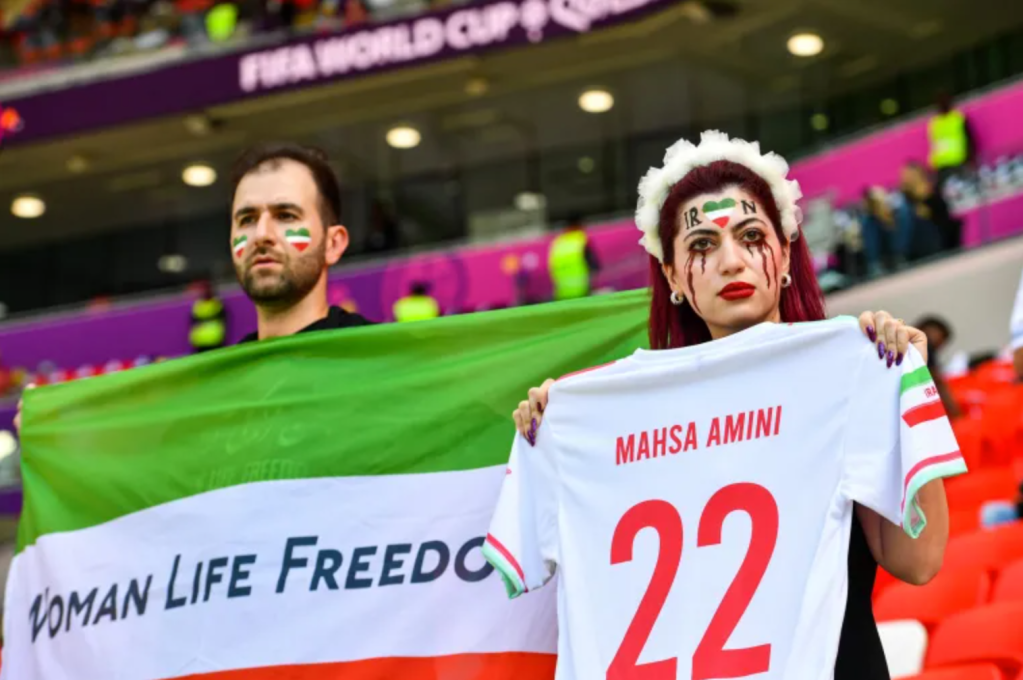
As the camera moved down the row of players, it captured stoic, cold, and silent faces staring blankly ahead. Not one member of the team sang the national anthem. In contrast to the muted players, the Iranian fans were loud and boisterous. However, many of these fans replaced the proud patriotic lyrics that praise the Islamic Republic of Iran with jeers, boos, and loud chants of “Zan, Zindagi, Azadi” (Women, Life, Freedom) and “Say her name, Mahsa Amini.”
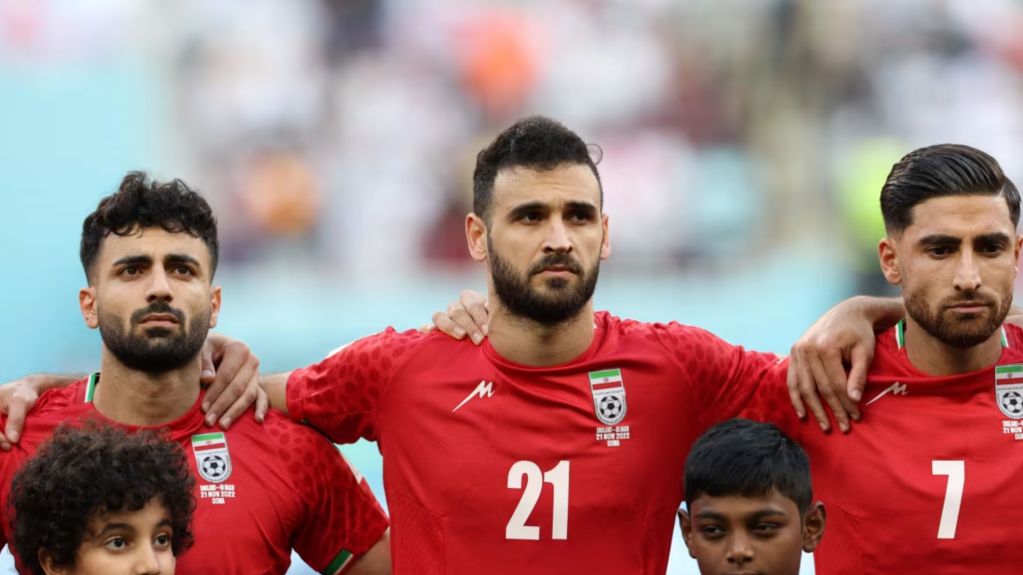
(Fadel Senna, AFP via Getty Images)
Months earlier in September, 22-year-old Mahsa Amini, was detained in Tehran by the Guidance Patrol, known more colloquially as the “religious morality police” for wearing her hijab “too loosely.” Hours later, she suddenly fell comatose, and died at a local hospital. It has been alleged that the previously healthy Amini was beaten and tortured while in custody. A later UN report confirmed signs of blunt trauma on her body suggesting physical violence while in custody as the cause of her death. In the coming weeks and months, hundreds of thousands of Iranians took to the streets to protest the treatment of women. The phrase “Women, Life, Freedom” became the slogan for demonstrators calling for the end of violence and discrimination against women in Iran.
This was a brave statement by the Iranian team (often nicknamed Team Melli—“National Team” in Farsi) as soccer players in Iran who have spoken out against the regime in the past have been routinely threatened, harassed, exiled, and occasionally arrested. Yet, despite the risks, Iranian soccer players have frequently used their elevated platforms to promote peace and change in Iran. This week, Explaining Offsides will map out instances of open resistance against the Iranian regime from national team players and fans over the last 20 years and discuss how these athletes push for peace and reform in Iran.
From National Heroes to State Pariahs
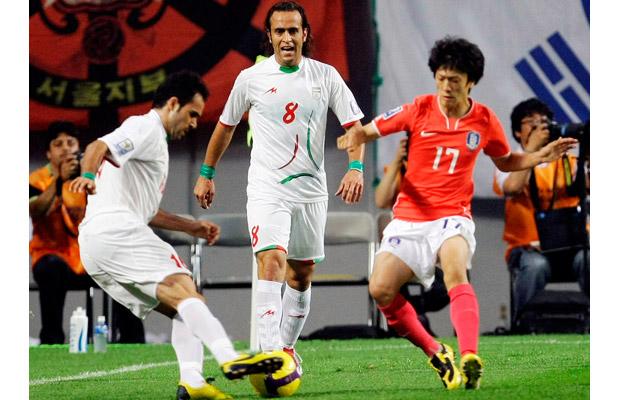
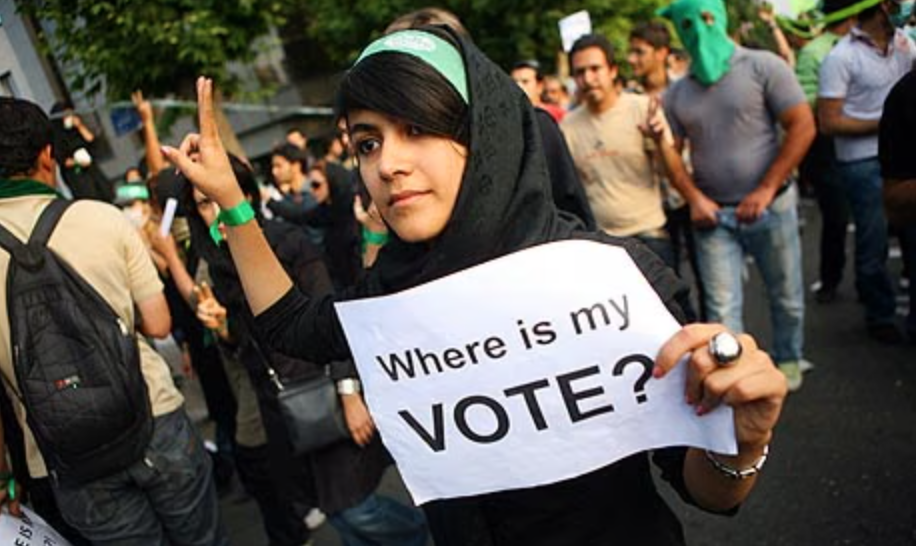
On June 17, 2009, the Iranian national team faced South Korea in a crucial FIFA World Cup qualifying match in Seoul. The Iranian players felt enormous tension knowing that a victory was required in order for Iran to qualify directly for the World Cup in South Africa the following summer. However, for six members of Team Melli there was an added element of nervousness due to the courageous stance they were about to take in front of the world. Days earlier, protests broke out throughout Iran when the incumbent hard-line President Mahmoud Ahmadinejad claimed victory in the 2009 Presidential Election over opposition reformist candidates Mir-Hossein Mousavi and Mehdi Karroubi. Numerous international governments, news outlets, and election observers called the results into question following reports of significant voting irregularities. In response Mousavi called for his supporters to take to the streets in peaceful protest, which hundreds of thousands did. These protests came to be known as the Green Movement as protesters wore green, the color of Mousavi’s campaign, in opposition to the Ahmadinejad government.
As a result, Ali Karimi, Masoud Shojaei, Hossein Ka’abi, Vahid Hashemian, Javad Nekounam, and captain Mehdi Mahdavikia walked onto the field sporting green wristbands in support of Mousavi—green was the color of Mousavi’s campaign—and the protesters. It is alleged that the players were instructed to remove the green bands at halftime. All complied except for captain Mahdavikia who wore the green armband throughout the duration of the game. Despite taking the lead through a goal from Shojaei, who by then had removed his armband, South Korea equalized late in the game, and Team Melli were eliminated from qualification for the 2010 FIFA World Cup. In the aftermath of this defiant display, four of the players—Karimi, Mahdavikia, Ka’abi, and Hashemian—were allegedly banished from the national team, though the Iranian Football Federation stated that they had all “retired.”
Mahdavikia’s banning was particularly noteworthy as a little over ten years earlier, he was the catalyst for Iranian soccer’s greatest moment. At the 1998 FIFA World Cup, Team Melli, which had qualified for the first time since the 1979 Iranian Revolution that installed the Islamist regime, were drawn into a group with the United States, leading to significant fears from FIFA regarding political volatility between the two nations. Despite the tension, the game took place in a peaceful manner, and the Iranian players walked out with bouquets for the American players as a peace offering. Seemingly secondary to the political symbolism of the event was the match itself in which Team Melli won their first ever World Cup match defeating the Americans 2-1. The scorer of the winning goal was a young, 20-year-old Mehdi Mahdavikia.
Ultimately, the Green Movement failed, and the Iranian government brutally quashed the protests, with human rights groups reporting the death of 80 protesters. Following pressure from FIFA, the Iranian Football Federation announced that there would be no punishments against the dissident players. Four of the six players who wore the green armbands eventually returned to the national team. Mahdavikia and Hashemian, however, never again played for Team Melli. Despite the breakdown of the resistance movement, those six footballers laid the groundwork for Iranian professional athletes to use their platform to express solidarity with movements of change in Iran. Their bravery not only encouraged future expressions of dissent from soccer players, but inspired fans, especially women, to stand up for basic human dignity.
Blue Girl
In September 2019, Sahar Khodayar left a Tehran courtroom deeply distraught. Six months earlier, she had been arrested and held in detention for three days for attempting to enter Azadi Stadium in Tehran disguised as a man in order to watch her favorite club, Esteghlal FC, take on Abu Dhabi club Al Ain FC in the AFC Champions League. Since the 1979 Iranian Revolution, it was illegal for women in Iran to attend men’s sporting events. Despite years of advocacy from women’s groups and human rights organizations, the only way for women in Iran to support Team Melli or their local clubs was to watch the games on television, or to disguise themselves as men wearing fake beards and wigs. Khodayar was charged with “openly committing a sinful act” by “appearing in public without a hijab.” Though she was released on bail, it is believed that at court, she overheard a clerk saying that Khodayar could face six months to two years of jail time. Witnesses say that Khodayar, who suffered from bipolar disorder, walked outside the courthouse, doused herself in gasoline, and did the unthinkable. She was rushed to the hospital with burns covering 90% of her body, injuries that she succumbed to a week later. She was just 29 years old.
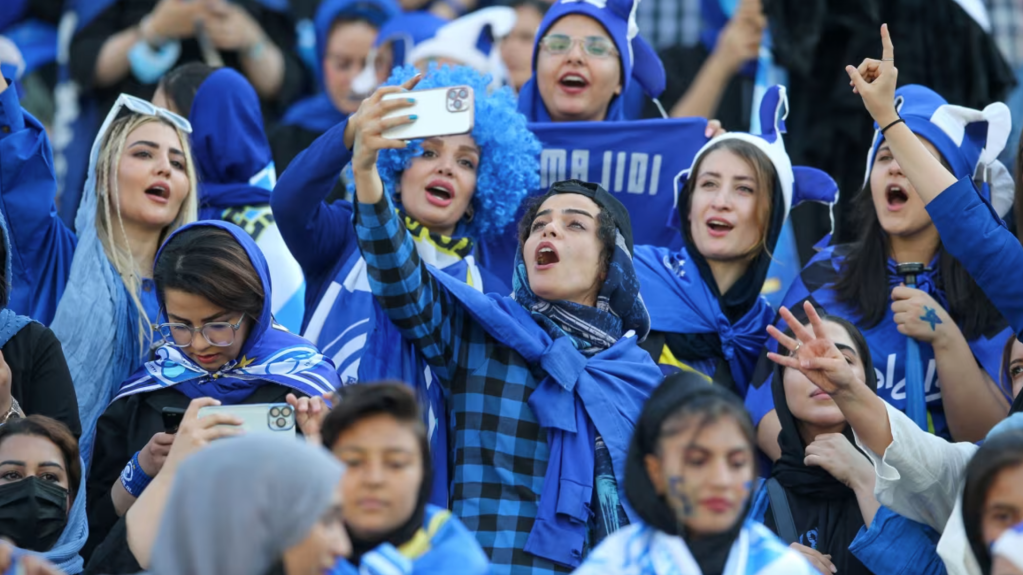
The self-immolation of Sahar Khodayar generated worldwide outrage. Nicknamed “the Blue Girl” for prominently wearing blue colors on social media in support of her beloved Esteghlal, Khodayar became a symbol of defiance against the regime that had denied women in Iran simple freedoms. Among the loudest voices was activist Maryam Shojaei, sister of Team Melli captain Masoud Shojaei. For years, Maryam Shojaei led a campaign that called on FIFA to pressure the Iranian Football Federation into allowing women to attend men’s soccer games, and Khodayar’s tragic passing forced FIFA’s hand. On September 19, 2019, FIFA released a statement that stated unequivocally that “women have to be allowed into football stadiums in Iran.”
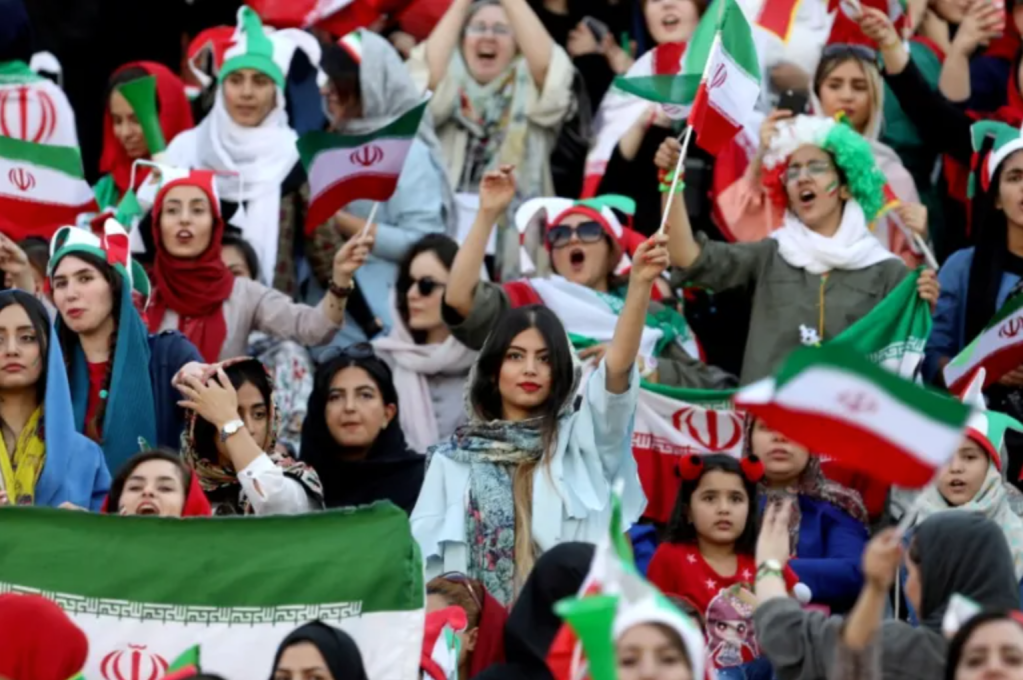
Just one month after the Blue Girl’s passing, 3,000 women were admitted to a Team Melli match at Azadi Stadium for the first time in 40 years where they witnessed Iran demolish Cambodia 14-0 in the first round of 2022 World Cup qualifying. The women in the crowd actively cheered, waved flags, and blew vuvuzelas throughout the match, occasionally chanting “Blue Girl, Blue Girl.” In 2022, women were allowed to attend an Iranian men’s domestic league match for the first time in over 40 years when 500 women were admitted to a game at Azadi Stadium between visiting team Sanat Mes Kerman FC and Khodayar’s beloved Esteghlal. Fans were seen sporting the same blue jerseys that spawned a movement for women’s rights in Iran. Some of them were overheard chanting “Blue Girl.” In 2020, Maryam Shojaei was awarded the Stuart Scott ENSPIRE award by ESPN for her advocacy for women’s rights in Iran.
Today, the ability of women to attend men’s soccer games remains inconsistent, and there continue to be instances of women being denied access to stadiums during games. However, the opening of the gates to women fans in 2019 and 2022 demonstrates the positive results of the many courageous women who fought for their simple right to gather together in public to enjoy recreation. Iranian fans now have a blueprint that has allowed them to take their fight for justice from stadium bleachers to streets around the country.
Silent on the Pitch, Loud Everywhere Else
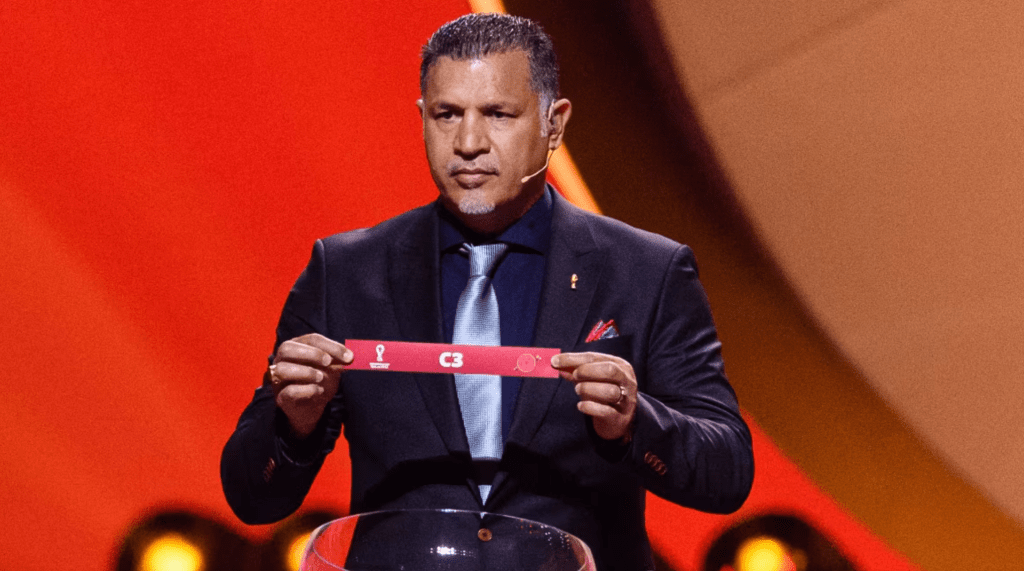
Prior to their 2022 FIFA World Cup campaign, the Iranian team once again found themselves at the crossroads of sport and politics as the Amini protests were reaching their apex, marking a notable shift toward open support of civilian demonstrations. While a handful of national team players displayed their support for free speech and fair elections with green wristbands in 2009, many more past and present Team Melli stars used their public platforms to openly express their dissatisfaction with the regime in 2022. Iran’s all-time goal-scorer and former head coach, Ali Daei, expressed his refusal to travel to Qatar to support the team at that year’s World Cup “in solidarity” with the protesters. Rahman Rezaei, a defender on the 2006 World Cup squad, also called for police officers who committed violence against protesters to be “tried in the nation’s courts,” and former right-back Voria Ghafouri called for Iranian authorities to cease killing Kurdish protesters in their reprisals—Amini was from Iran’s Kurdistan province.
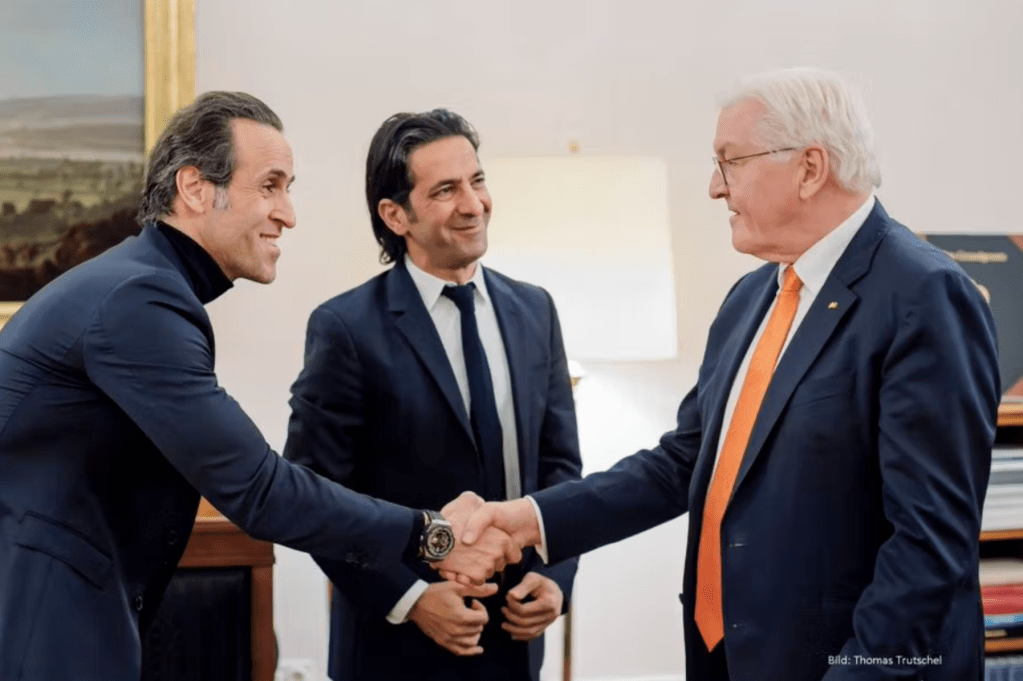
Most active among former national team stars was Ali Karimi. Karimi, who had played two seasons for German giants Bayern Munich and starred for Team Melli at the 2004 Asian Cup and 2006 World Cup, was one of the ringleaders in the green wristband demonstration in 2009 in Korea. Karimi became one of the leading celebrity supporters of the Amini demonstrations with frequent social media posts backing the protesters and expressing anger at the treatment of women in Iran, stating in one post that “not even holy water could wash away the disgrace” of Amini’s murder. Karimi would go as far as to meet with then-President of Germany, Frank-Walter Steinmeier, to garner additional international support for the protests.
Despite open calls for change from various former players, the 2022 Iranian World Cup squad members remained silent at first. This silence, however, would be broken by perhaps the team’s best player, Sardar Azmoun, one month before the tournament. On his Instagram story, Azmoun, then playing for German club Bayer Leverkusen, not only expressed his support for the protesters but also implied that there had been a gag order placed on the team forbidding them from making statements about the ongoing situation. He then indicated that by speaking out, he was risking his spot on the team before defiantly posting, “That is worth sacrificing for one strand of Iranian women’s hair. Shame on you who kill people so easily. Long live Iranian women.” Despite his public stance, Azmoun would feature at the 2022 FIFA World Cup, and defender Ehsan Hajsafi would join him in expressing his support for the protesters, stating that the demonstrators “should know that we are with them. And we support them. And we sympathize with them regarding the conditions.”
Many had hoped that the rising movement against the government would finally signal the capitulation of Iran’s authoritarian regime. However, Iranian authorities violently suppressed the protests leading to the deaths of at least 530 civilians and the arrest of about 22,000 demonstrators. Given the atrocities taking place in Iran, there was tremendous pressure placed on Team Melli to perform well on the field at the World Cup in a difficult group featuring England, Wales, and the United States. But beyond that, the team was given the impossible task of representing a unified nation in a dignified manner appeasing both the protesters and the government.
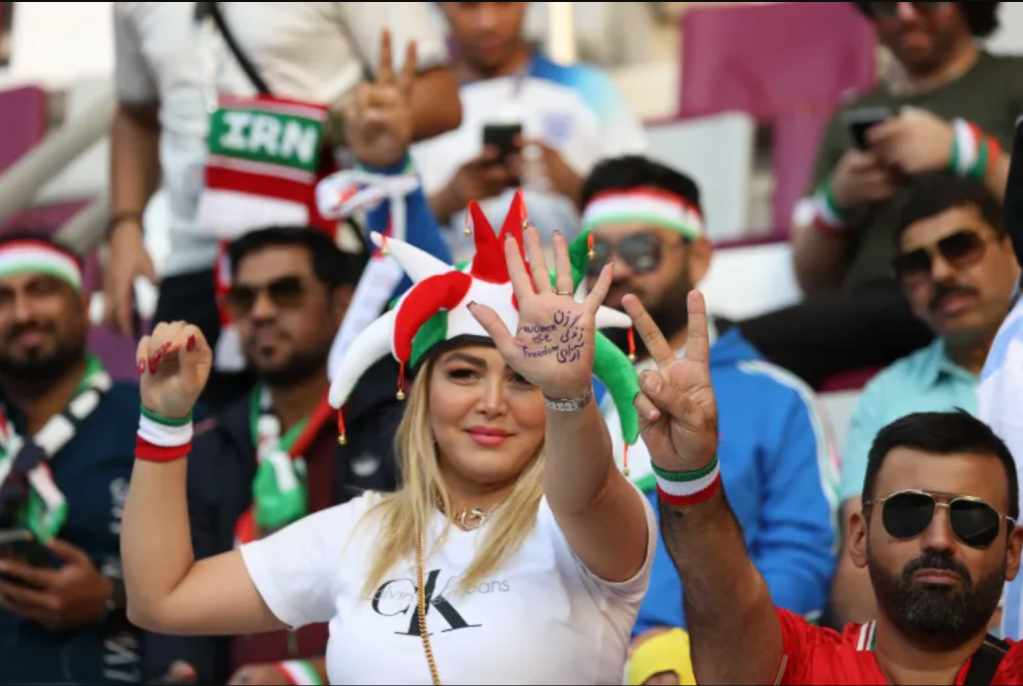
Following the team’s refusal to sing the national anthem, Iran were decisively beaten 6-2 by England. Pro-regime factions of the Iranian media blamed the poor performance on the political climate, the player protests, and the fans cheering pro-demonstration chants within the stadium. Following the loss, CNN alleged that multiple members of the Iranian team were the recipients of threats against themselves and their families for their loss and refusal to sing the national anthem. CNN also claimed that the Iranian government sent pro-government actors to serve as fans to drown out demonstrators during Iran’s next game against Wales. In that game, the players sang the national anthem and Team Melli scored two late goals to earn a surprise victory that kept Iran in contention for a place in the next round. However, Team Melli lost their final game against the United States, a loss that eliminated Iran from the tournament.
Despite of their displays of resistance at the tournament, the team largely escaped punishment from the Iranian government. Former national team members who spoke out in support of the demonstrations, however, faced severe backlash. For his boycott of the World Cup, Ali Daei’s businesses in Tehran were shut due to his “cooperation with anti-revolutionary groups,” and his passport was confiscated, preventing the former star player from leaving the country. After the tournament, a flight from Tehran to Dubai was rerouted, forced to land in Iran, and Daei’s wife and daughter were ordered off the plane. Before the tournament, Voria Ghafouri was arrested for “spreading propaganda against the state.” Ali Karimi fled to Dubai, was tried in absentia for “encouraging riots,” and had his home and possessions seized by authorities. Though his assets were eventually released, he later alleged that he and his family received death threats from Iranian government officials.
Emboldened Superstars and Inspired Citizens
Earlier this month, Mehdi Taremi, arguably Iran’s most talented goalscorer alongside Azmoun, refused to celebrate a goal he scored against Atromitos FC while playing for Greek club Olympiakos FC. The 33-year-old veteran striker stated the following when asked about his muted celebration:
It actually has to do with the conditions in my country. There are problems between the people and the government. The people are always with us, and that’s why we are with them. I couldn’t celebrate in solidarity with the Iranian people. I know that Olympiakos fans would like me to be happy, but I don’t celebrate the goals, in solidarity with what the Iranian people are going through. – Mehdi Taremi on not celebrating his goal against Atromitos
Taremi was referring to ongoing violent protests in Iran that have swept the nation in recent weeks. What began as demonstrations denouncing Iran’s poor economic conditions has spiraled into widespread dissent against the Islamic Republic regime. Many in Iran feel that their leaders’ fixation on fuel, nuclear weapons, and defense spending has prevented authorities from taking measures to improve the value of the national currency and to make everyday goods like groceries more affordable. Increased international sanctions against Iran have only exacerbated the nation’s economic woes. Thus, hundreds of thousands of Iranians have taken to the streets across the country to call for reform and possibly regime change, with some protesters going as far as to call for the return of the Pahlavi monarchy that was overthrown in the 1979 Revolution.
The 2022 FIFA World Cup highlighted the risks faced by former players who speak out against the government. At the same time, the absence of punishment for current national team players suggests that active members of Team Melli—by virtue of their international profile—enjoy a degree of immunity from state retaliation. This status affords them a rare capacity for public expression that most of their compatriots do not possess. As a result, current and former players have produced a surge of social media posts and public gestures that openly or implicitly support the protesters. In addition to Mehdi Taremi, players such as Sardar Azmoun, Alireza Jahanbakhsh, and Ramin Rezaeian have voiced support for the protesters and concern for their safety through social media posts, goal celebrations, wristbands, and other forms of expression.
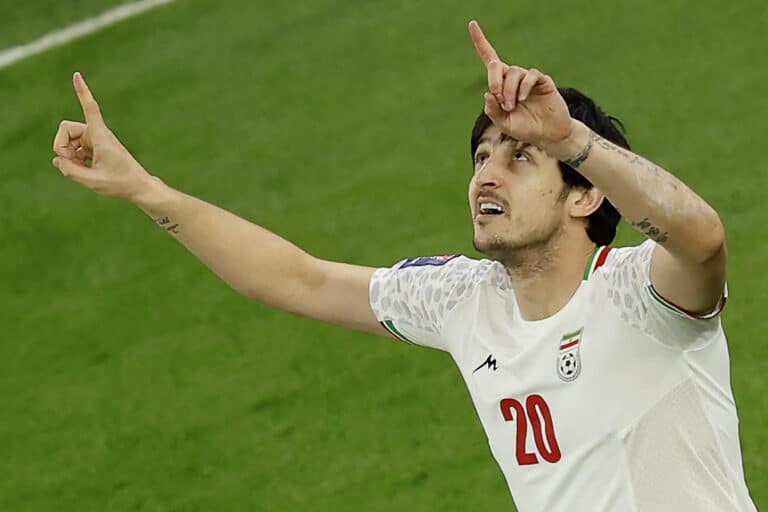
Given the ongoing government-initiated internet blackout in Iran, it is exceptionally difficult to get a sense of how the protests are influencing public opinion. Though a small sample size, statements from Iranian soccer players, many of whom are based abroad, gives a rare insight into how public figures are reacting to the violent clashes. These reactions portray a population that is distraught with the government’s direct targeting of civilians.
Stoppage Time
It is extraordinarily challenging to predict what changes, if any, will result from these protests. On one hand, the current protests are the largest since the 1979 Revolution. Given their proximity to other major protests in recent decades, particularly the Mahsa Amini protests of 2022, it is reasonable to assume that demonstrations will only grow larger and more frequent until either the fall of the current regime or the creation of an environment that is more tolerant of dissenting voices.
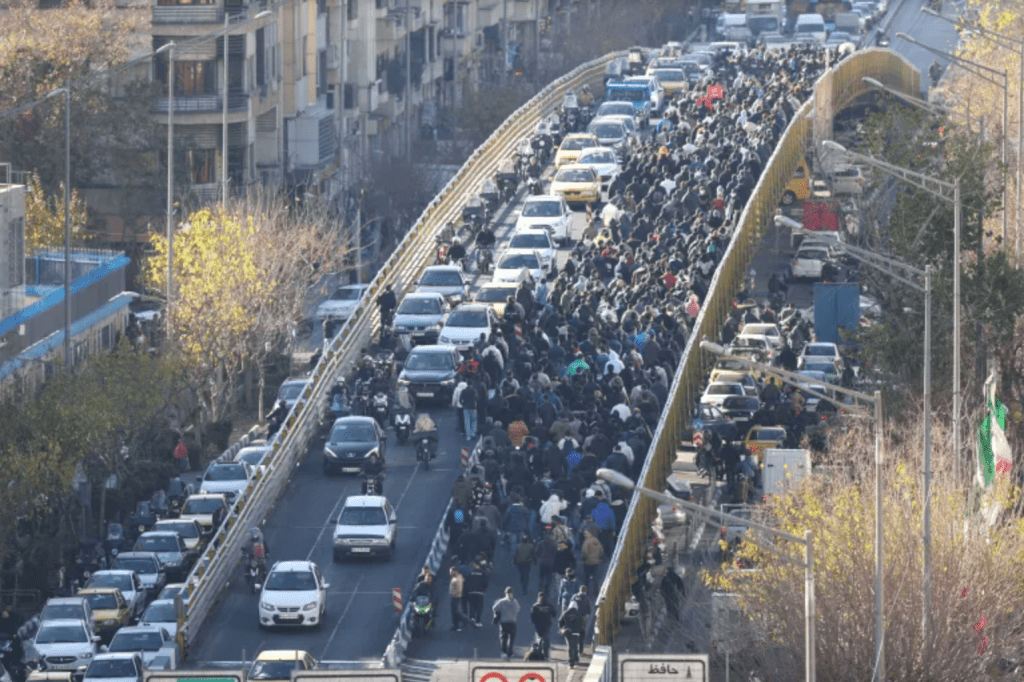
On the other hand, time and time again the Iranian government has shown that there is no limit to the amount of violence it is willing to use in order to maintain their grip on power. Though the protests are unprecedented in the history of the Islamic Republic, so too is the extent of the regime’s violent crackdown against its citizens. At the time of publication, direct violence from Iranian security forces had led to the deaths of as many as 30,000 civilians. This figure includes several former professional soccer players, such as Mojtaba Torshiz, Amir Kouhkan, and 17-year-old Rebin Moradi, all of whom were gunned down by Iranian authorities during the protests. The New York Times and Bloomberg have both indicated that these protests have already been effectively crushed by security forces.
As Team Melli takes the field in the United States this summer, one can only hope that the players will be able to represent a population that is freer and more empowered and emboldened to voice their desires for the country which they wish to see. Perhaps, by expressing their opinions publicly, these brave athletes will embolden the people who they represent.

 Explaining Offsides
Leave a comment